
 by
by The U.S. vehicle-to-grid technology market is experiencing rapid expansion as electric vehicles evolve beyond transportation into intelligent energy storage assets. The market size is estimated at USD 1.85 billion in 2025 and is projected to grow from USD 2.45 billion in 2026 to approximately USD 30.84 billion by 2035, registering an impressive CAGR of 32.49% during the forecast period.
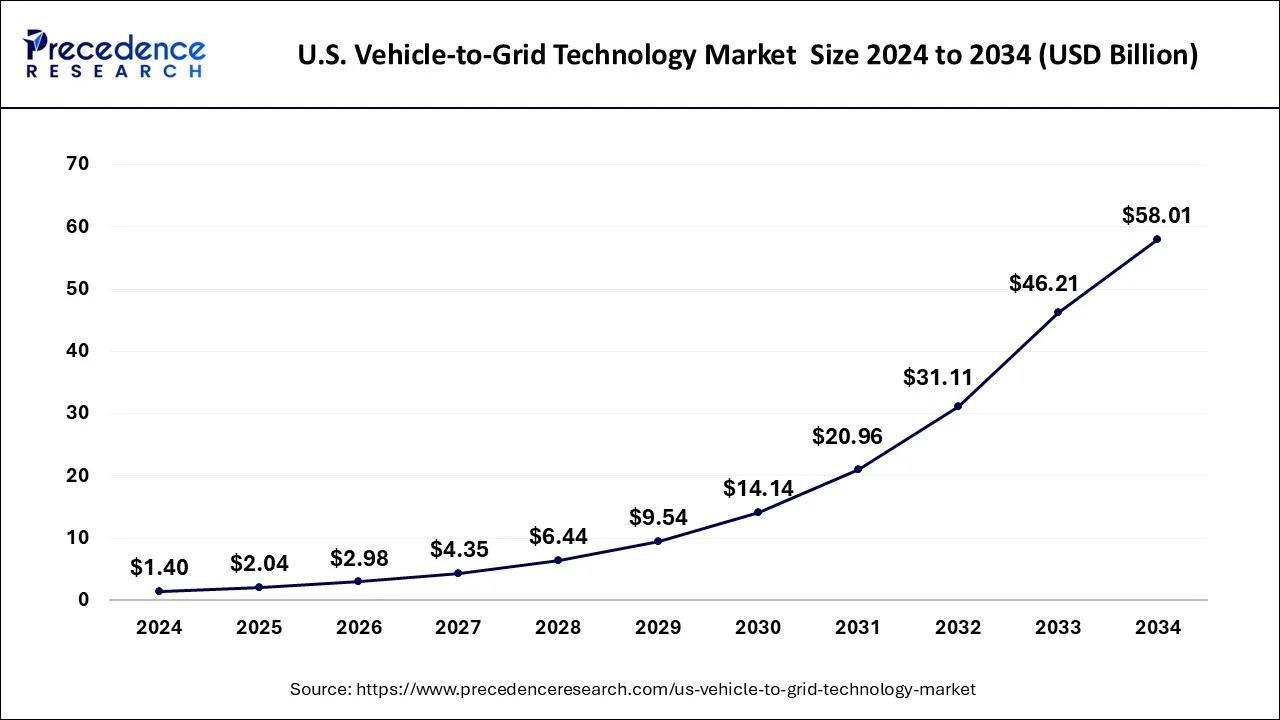
The rapid adoption of electric vehicles (EVs), modernization of the U.S. electricity grid, increasing renewable energy integration, and government investments in clean energy infrastructure are significantly driving market growth. Vehicle-to-grid technology enables EV batteries to store excess electricity and return it to the power grid during periods of peak demand, transforming EVs into distributed energy resources that support grid resilience and energy efficiency.
The future of the U.S. V2G industry is being shaped by advancements in bidirectional charging systems, artificial intelligence (AI)-powered energy management, virtual power plants (VPPs), smart grid technologies, and cloud-based energy platforms. Utilities, automakers, charging infrastructure providers, software developers, and investors are increasingly collaborating to build scalable V2G ecosystems capable of supporting the nation’s clean energy transition.
U.S. Vehicle-to-Grid Technology Market Overview
The U.S. vehicle-to-grid technology market has emerged as one of the fastest-growing sectors within the smart energy and electric mobility industries. Vehicle-to-grid (V2G) technology enables bidirectional communication and electricity flow between electric vehicles and the power grid, allowing EV batteries to supply stored electricity back to utilities during periods of high demand while charging during off-peak hours.
As renewable energy sources such as solar and wind continue expanding across the United States, maintaining grid stability has become increasingly challenging due to intermittent power generation. V2G technology provides a flexible and scalable solution by leveraging millions of connected electric vehicles as mobile energy storage units. This helps utilities balance electricity demand, improve frequency regulation, reduce dependence on fossil fuel peaker plants, and maximize renewable energy utilization.
Continuous advancements in bidirectional chargers, battery management systems, AI-driven energy optimization software, Internet of Things (IoT) connectivity, and cloud-based grid management platforms are significantly improving the commercial viability of V2G systems. These innovations are enabling utilities and fleet operators to manage distributed energy resources more efficiently while creating new revenue opportunities for EV owners through grid participation programs.
Download the Sample: https://www.precedenceresearch.com/sample/3738
Investment Areas Attracting Industry Attention
Bidirectional Charging Infrastructure
- Investment in bidirectional charging infrastructure continues to be one of the strongest growth drivers across the U.S. V2G market. Advanced AC and DC bidirectional chargers enable seamless two-way electricity transfer between electric vehicles and the grid while improving charging efficiency and reducing energy losses.
- Public utilities, charging network providers, and infrastructure developers are investing heavily in expanding nationwide charging networks capable of supporting large-scale commercial V2G deployment.
Smart Grid Modernization
- Utilities across the United States are investing billions of dollars in modernizing aging power infrastructure through digital substations, advanced metering infrastructure (AMI), smart transformers, and distributed energy resource management systems (DERMS).
- These investments create a strong foundation for integrating V2G technology into future electricity networks while enhancing grid resilience, reliability, and operational efficiency.
AI and Energy Management Platforms
- Artificial intelligence is rapidly transforming V2G operations through intelligent energy forecasting, automated charging optimization, battery health monitoring, and predictive maintenance.
- Cloud-based software platforms enable utilities to coordinate thousands of connected electric vehicles in real time, maximizing grid services while minimizing battery degradation and operational costs.
Fleet Electrification
- Commercial fleet operators, logistics companies, public transportation agencies, and school districts are increasingly investing in V2G-enabled electric fleets.
- Electric buses, delivery vans, municipal vehicles, and corporate fleets offer predictable charging schedules, making them ideal assets for participating in demand response programs and energy trading markets.
Renewable Energy Integration
- Growing investments in renewable energy projects are increasing demand for flexible energy storage solutions.
- Vehicle-to-grid technology allows electric vehicles to store excess solar and wind energy during periods of high generation and discharge electricity during peak demand, improving renewable energy utilization while reducing grid congestion.
Emerging Segments Creating New Revenue Streams
AI-Powered Energy Optimization
- Artificial intelligence is becoming one of the most valuable technologies within the V2G ecosystem. AI algorithms continuously monitor electricity demand, renewable energy generation, battery status, and electricity pricing to optimize charging and discharging schedules.
- Machine learning models improve demand forecasting, automate grid balancing, reduce energy costs, and maximize financial returns for EV owners participating in grid services.
Virtual Power Plants (VPPs)
- Virtual power plants represent one of the fastest-growing applications for V2G technology.
- By connecting thousands of distributed electric vehicles through cloud-based software platforms, utilities can aggregate battery capacity into virtual energy storage systems capable of supporting frequency regulation, emergency backup power, and peak load management.
Commercial Fleet Energy Services
- Commercial fleets are rapidly becoming major contributors to V2G deployment.
- Fleet operators are increasingly participating in utility demand response programs by supplying stored electricity back to the grid during peak pricing periods, generating additional revenue while lowering fleet operating costs.
Residential Smart Energy Ecosystems
- Residential V2G adoption is expanding alongside smart homes equipped with rooftop solar panels, home energy management systems, and battery storage solutions.
- Homeowners are increasingly using electric vehicles as backup power sources while optimizing household electricity consumption based on real-time energy prices.
Utility Grid Services
- Utilities are leveraging V2G technology to improve frequency regulation, voltage stabilization, spinning reserves, and peak shaving services.
- As electricity demand continues rising nationwide, grid operators increasingly view electric vehicles as valuable distributed energy assets that strengthen power system reliability.
Future Opportunities Shaping the Next Decade
- The future of the U.S. vehicle-to-grid technology market will be driven by the convergence of electrified transportation, artificial intelligence, renewable energy, and digital power infrastructure.
- Federal investments supporting charging infrastructure, expanding EV adoption, smart grid modernization, and distributed energy resources will continue accelerating market growth.
- Future innovations including AI-powered grid orchestration, blockchain-enabled energy trading, vehicle-to-home (V2H) integration, autonomous energy management, and next-generation battery technologies are expected to transform how electricity is generated, stored, and consumed.
- Organizations that prioritize technology innovation, interoperability, cybersecurity, battery optimization, regulatory compliance, and strategic utility partnerships will be well positioned to capitalize on the next generation of opportunities within the U.S. V2G market.
Latest Innovations Transforming the U.S. Vehicle-to-Grid Technology Market
- AI-powered energy management improving charging optimization and grid balancing.
- Bidirectional fast chargers enabling efficient two-way electricity flow.
- Virtual power plant platforms aggregating EV batteries for grid services.
- Cloud-based energy management systems enhancing real-time monitoring.
- Smart charging algorithms reducing electricity costs and battery degradation.
- Integration of V2G with solar, wind, and home energy storage systems.
- Advanced battery management software extending battery lifespan.
- Expansion of commercial fleet V2G programs supporting grid resilience.
Recent Developments U.S. Vehicle-to-Grid Technology Market
- March 2026: Xos announced plans to begin manufacturing V2G-enabled electric vehicles starting in April 2026, initially focusing on a major North American electric school bus platform.
- February 2026: Tesla introduced its Powershare Grid Support Program in Texas, allowing Cybertruck owners to export electricity back to the grid during peak demand and receive energy bill credits.
- August 2025: Eaton and ChargePoint launched the ChargePoint Express Grid, a high-power DC V2X charging solution supporting up to 600 kW charging for passenger EVs and megawatt-scale charging for commercial fleets.
- January 2025: Nuvve Holding Corp. launched a new portfolio of bidirectional and unidirectional chargers ranging from 20 kW to 360 kW for fleet, public infrastructure, and microgrid applications.
Read More: Non-Invasive Prenatal Testing Market
U.S. Vehicle-to-Grid Technology Market Companies
- ABB
- AC Propulsion, Inc.
- Edison International
- EV Grid, Inc.
- Fermata Energy
- Hitachi, Ltd.
- Honda Motor Co., Ltd.
- NRG Energy, Inc.
- Nuvve Holding Corp.
- Wallbox Inc.
Segments Covered in the Report
By Component Type
Hardware
- Bidirectional Chargers (AC, DC)
- Vehicle-side Bidirectional Electronics
- Grid Integration Hardware
Software
- Smart Charging and Energy Management
- Aggregator / Virtual Power Plant Platforms
- Connectivity & Cloud Services
Services
- Installation and Commissioning
- Operations & Maintenance Services
- Energy Trading / Grid Services Revenue
Looking Ahead
The U.S. vehicle-to-grid technology market is transforming the nation’s energy landscape by integrating electric mobility with intelligent power infrastructure. As electric vehicles increasingly function as distributed energy resources, V2G technology will play a critical role in improving grid reliability, accelerating renewable energy adoption, and reducing carbon emissions. Growing investments in AI-powered energy management, bidirectional charging infrastructure, virtual power plants, and smart grid modernization will continue driving market expansion throughout the next decade. Improved battery technologies, supportive government policies, and stronger collaboration between utilities, automakers, and technology providers will further accelerate commercial deployment.
Organizations that strategically invest in advanced charging technologies, digital energy platforms, grid integration solutions, and customer-centric innovation will be well-positioned to lead the next phase of growth in the U.S. vehicle-to-grid technology market.
For report inquiries and custom research requirements, please contact our analyst team at:
[email protected] | +1 804 441 9344
