
 by
by The global non-invasive prenatal testing market is witnessing remarkable growth as healthcare providers increasingly adopt advanced genetic screening technologies for safer and earlier prenatal diagnosis. The market size was valued at USD 7.18 billion in 2025 and is projected to grow from USD 8.05 billion in 2026 to approximately USD 20.89 billion by 2035, expanding at a CAGR of 11.27% during the forecast period.
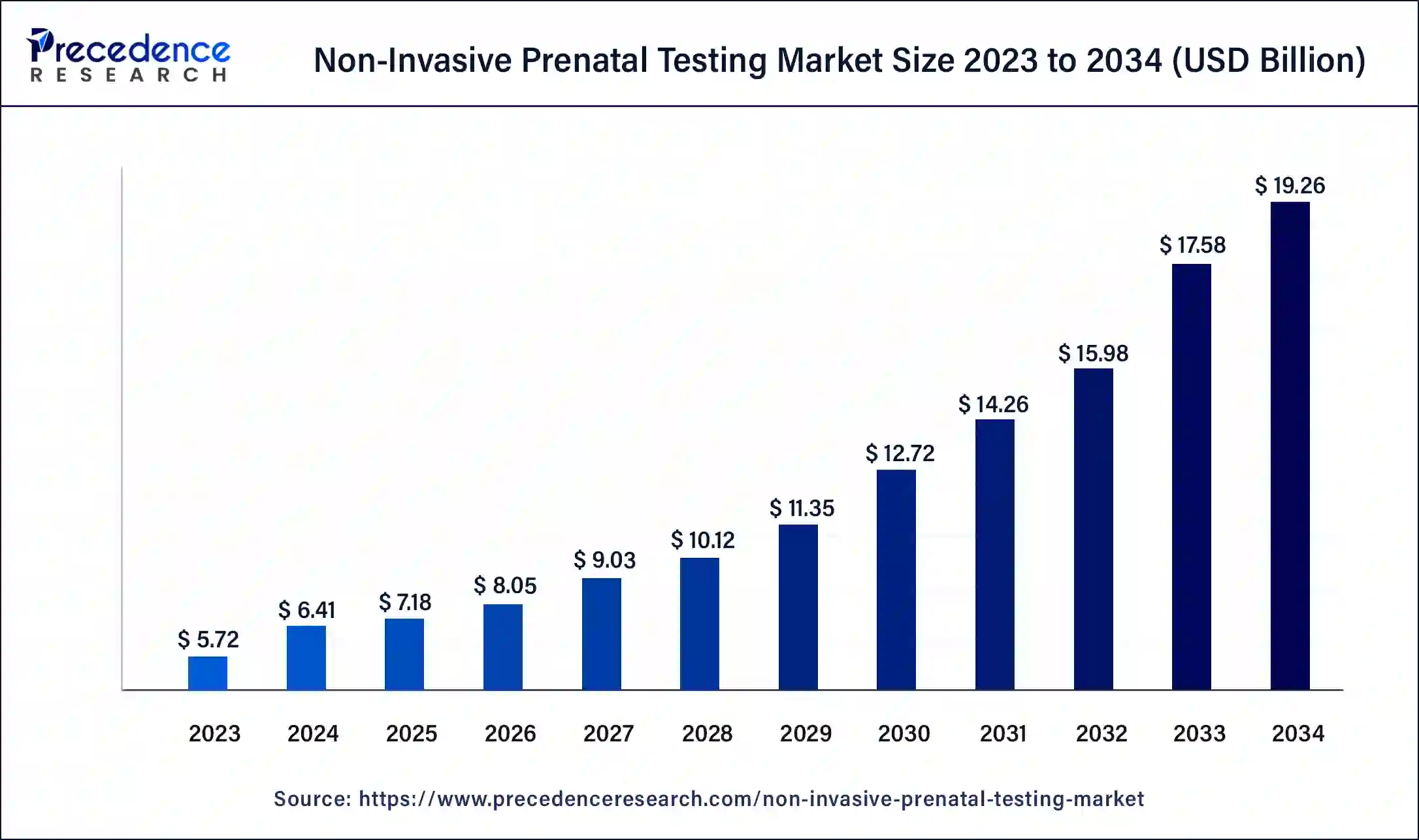
Growing maternal age, rising awareness of fetal genetic disorders, increasing demand for early prenatal screening, and continuous advancements in next-generation sequencing (NGS), cell-free DNA (cfDNA) testing, and artificial intelligence (AI) are driving market expansion worldwide. As prenatal healthcare increasingly shifts toward precision medicine, NIPT is becoming an essential component of modern pregnancy care.
The future of the NIPT industry is being shaped by breakthroughs in genomic science, AI-assisted diagnostics, expanding reimbursement policies, and improved access to prenatal care across emerging economies. Healthcare providers, diagnostic laboratories, biotechnology companies, and investors are increasingly focusing on developing highly accurate, affordable, and personalized prenatal screening solutions that minimize clinical risk while improving pregnancy outcomes.
Non-Invasive Prenatal Testing Market Overview
The global non-invasive prenatal testing market has evolved into one of the fastest-growing segments within molecular diagnostics and prenatal healthcare. Unlike traditional invasive procedures such as amniocentesis and chorionic villus sampling (CVS), NIPT analyzes cell-free fetal DNA circulating in maternal blood, allowing healthcare professionals to identify chromosomal abnormalities safely and accurately during the early stages of pregnancy.
Growing awareness among expectant parents regarding early prenatal screening, combined with technological improvements in genetic sequencing, has significantly increased global adoption. Conditions including Down syndrome (Trisomy 21), Edwards syndrome (Trisomy 18), Patau syndrome (Trisomy 13), and Turner syndrome are now routinely screened using highly sensitive NIPT platforms. Continuous innovation in sequencing technologies, bioinformatics software, automation, and cloud-based genomic analysis has improved diagnostic accuracy while reducing turnaround times. These developments are helping diagnostic laboratories process larger testing volumes with greater efficiency.
Download the Sample: https://www.precedenceresearch.com/sample/3362
Investment Areas Attracting Industry Attention
Next-Generation Sequencing Technologies
- Investment in advanced sequencing technologies remains one of the strongest growth drivers across the NIPT market.
- Next-generation sequencing platforms continue to improve testing accuracy, reduce sequencing costs, and enable detection of increasingly complex genetic disorders.
- Diagnostic companies investing in high-throughput sequencing technologies are expected to strengthen their competitive position while improving laboratory productivity.
AI and Bioinformatics Solutions
- Artificial intelligence and advanced bioinformatics platforms are revolutionizing prenatal genetic diagnostics.
- AI-assisted genomic interpretation enables laboratories to process large datasets more efficiently while reducing manual analysis and improving clinical accuracy.
- Investments in cloud-based genomic platforms, predictive analytics, and automated reporting systems are expected to generate long-term value across the prenatal diagnostics industry.
Research and Precision Medicine
- Biotechnology companies continue investing heavily in research focused on expanding the clinical applications of NIPT.
- Collaborations between diagnostic companies, pharmaceutical firms, and academic research institutions are accelerating innovation in fetal genomics, inherited disease screening, and precision medicine.
- These partnerships are expected to create new commercial opportunities while advancing prenatal healthcare worldwide.
Sustainable Diagnostic Infrastructure
- Healthcare organizations are increasingly investing in environmentally sustainable laboratory operations.
- Automation, digital reporting, energy-efficient laboratory equipment, recyclable packaging materials, and reduced chemical waste are becoming important priorities across diagnostic facilities.
- Companies adopting sustainable operational practices are expected to strengthen their long-term competitiveness while meeting evolving ESG expectations.
Emerging Segments Creating New Revenue Streams
AI-Powered Prenatal Diagnostics
- Artificial intelligence is becoming one of the most transformative technologies within prenatal genetic screening. AI algorithms rapidly analyze complex genomic datasets, identify chromosomal abnormalities with greater precision, and assist clinicians in interpreting sequencing results.
- Machine learning models can detect subtle genetic variations, improve risk prediction, reduce diagnostic errors, and optimize laboratory workflows. AI-powered reporting systems are also supporting genetic counselors by delivering patient-specific recommendations, making prenatal screening faster, more accurate, and clinically efficient.
- As healthcare providers increasingly adopt digital pathology and precision medicine, AI-enabled NIPT solutions are expected to become one of the fastest-growing market segments.
Expanded Genetic Screening Applications
- Modern NIPT is expanding beyond common chromosomal disorders to include microdeletions, rare chromosomal abnormalities, single-gene disorders, and inherited genetic diseases.
- Healthcare providers increasingly prefer comprehensive prenatal screening panels capable of detecting a broader range of fetal genetic conditions without increasing clinical risk.
- Continuous improvements in sequencing technology are enabling diagnostic companies to commercialize more advanced screening solutions that provide greater clinical value for physicians and expectant families.
Diagnostic Laboratory Expansion
- Diagnostic laboratories continue to represent one of the fastest-growing end-user segments as demand for molecular genetic testing increases globally.
- Laboratories are investing heavily in automated sequencing platforms, robotic sample preparation systems, cloud-based bioinformatics software, and AI-driven genomic interpretation tools to improve testing capacity and operational efficiency.
- Growing outsourcing of prenatal genetic testing by hospitals is creating significant opportunities for specialized diagnostic service providers worldwide.
Personalized Prenatal Healthcare
- Precision medicine is transforming prenatal care by enabling individualized pregnancy risk assessments based on genetic information.
- Healthcare providers increasingly integrate NIPT results with family history, maternal health data, ultrasound findings, and genomic analysis to create personalized prenatal care plans.
- This shift toward personalized healthcare is expected to improve pregnancy outcomes while creating new commercial opportunities for genomic diagnostics companies.
Future Opportunities Shaping the Next Decade
- The future of the non-invasive prenatal testing market will be driven by the convergence of genomics, artificial intelligence, precision medicine, and digital healthcare. Rising maternal age, increasing prevalence of genetic disorders, expanding prenatal screening programs, and improved healthcare accessibility will continue supporting market growth globally.
- Emerging economies are expected to experience particularly strong expansion as healthcare infrastructure improves and awareness regarding prenatal genetic screening continues to increase.
- Future innovations including AI-assisted diagnosis, expanded genomic screening panels, cloud-based laboratory management systems, personalized genetic counseling, and advanced sequencing technologies will further reshape prenatal healthcare over the coming decade.
- Companies that prioritize technological innovation, clinical accuracy, affordability, regulatory compliance, and patient-centered care will be well-positioned to capitalize on the next generation of opportunities in the global NIPT market.
Latest Innovations Transforming the Non-Invasive Prenatal Testing Market
- AI-powered genomic interpretation improving diagnostic accuracy.
- Cloud-based bioinformatics platforms accelerating genetic data analysis.
- Expansion of NIPT beyond chromosomal disorders into single-gene disease screening.
- Automated laboratory workflows reducing turnaround times.
- Advanced sequencing platforms enabling higher testing throughput.
- Digital genetic counseling platforms improving patient engagement.
- Multi-condition prenatal screening panels expanding clinical applications.
- Integration of precision medicine into maternal healthcare.
Non-Invasive Prenatal Testing Market Companies
- Illumina Inc.
- Natera Inc.
- F. Hoffmann-La Roche Ltd.
- Laboratory Corporation of America Holdings (LabCorp)
- Quest Diagnostics Inc.
- Qiagen
- Eurofins LifeCodexx GmbH
- MedGenome Labs Ltd.
- Genesis Genetics (CooperSurgical Inc.)
- Myriad Women’s Health Inc.
- Progenity Inc.
- Centogene N.V.
Read More: Water Purifier Market
Segments Covered in the Report
By Component
- Instruments
- Kits and Reagents
- Services
By Application
- Down Syndrome (Trisomy 21)
- Edwards Syndrome (Trisomy 18)
- Patau Syndrome (Trisomy 13)
- Turner Syndrome
- Other Applications
By End User
- Hospitals
- Diagnostic Laboratories
By Region
- North America
- Europe
- Asia Pacific
- Latin America
- Middle East & Africa
Looking Ahead
The non-invasive prenatal testing market is rapidly transforming prenatal healthcare through the integration of genomic science, artificial intelligence, and precision medicine. Growing demand for safe, accurate, and early fetal screening is encouraging continuous innovation in sequencing technologies, genetic analysis platforms, and clinical decision-support systems.
As healthcare systems increasingly emphasize preventive medicine and personalized care, NIPT is expected to become a routine component of prenatal screening across developed and emerging markets. Continued improvements in affordability, reimbursement coverage, laboratory automation, and AI-driven diagnostics will further accelerate global adoption.
Organizations that strategically invest in advanced genetic technologies, digital healthcare platforms, clinical research, and patient-focused innovation will be well-positioned to lead the next phase of growth in the global non-invasive prenatal testing market.
For report inquiries and custom research requirements, please contact our analyst team at: [email protected] | +1 804 441 9344
