
 by
by The global healthcare cybersecurity market was valued at USD 31.90 billion in 2025 and is projected to reach approximately USD 142.45 billion by 2035, growing at a CAGR of 16.12% from 2026 to 2035. This strong growth is driven by increasing regulatory requirements for healthcare data protection, rising cyber threats targeting healthcare organizations, and the expanding adoption of connected medical devices and cloud-based healthcare systems. The growing use of the Internet of Medical Things (IoMT) and digital healthcare technologies is further accelerating demand for advanced cybersecurity solutions across the healthcare sector.
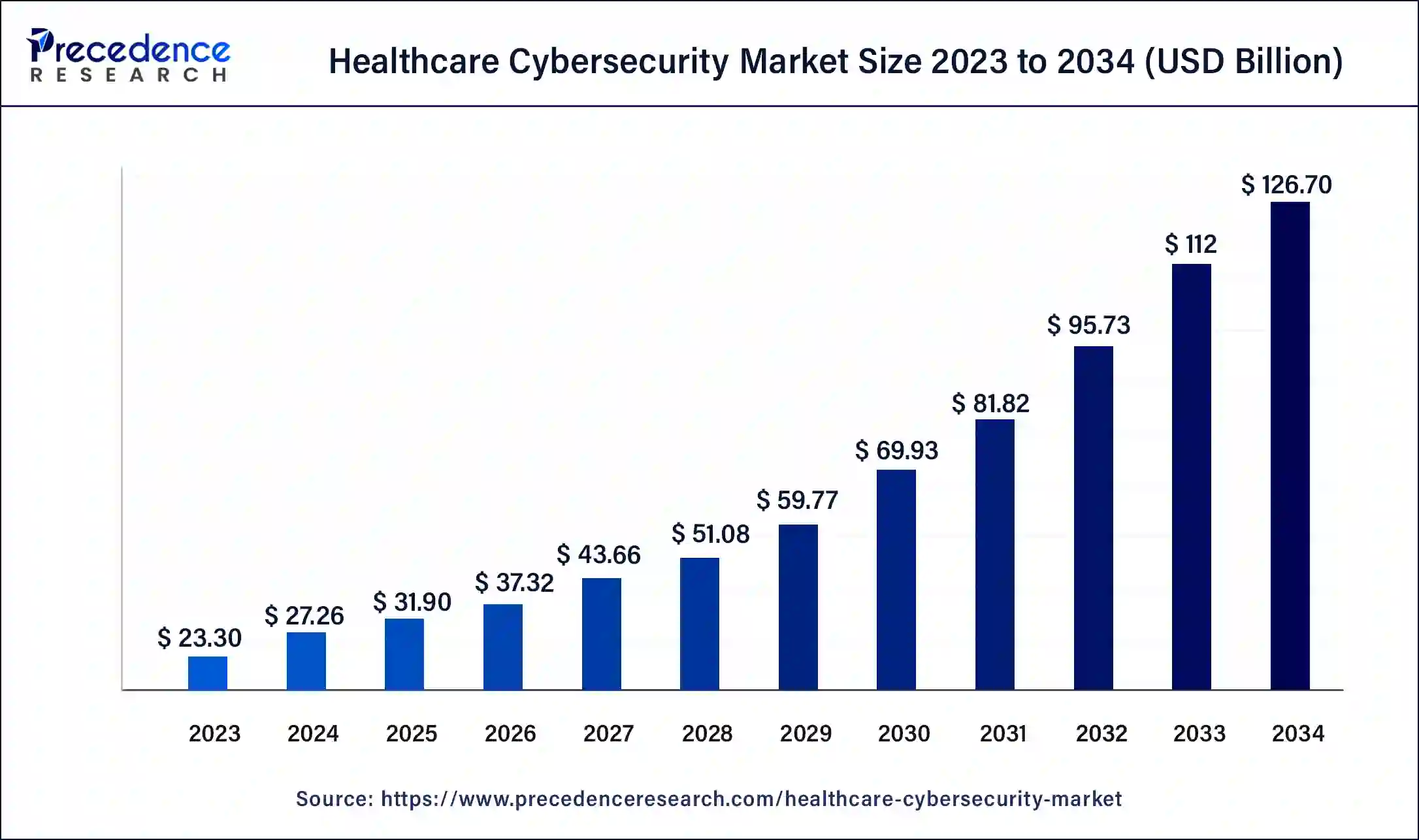
Healthcare Cybersecurity Market Overview
The healthcare cybersecurity market is experiencing rapid growth due to the increasing frequency of cyberattacks targeting healthcare organizations. Hospitals, pharmaceutical companies, healthcare payers, biotechnology firms, and telehealth providers are actively strengthening their cybersecurity infrastructure to protect critical systems and sensitive patient information.
North America currently dominates the market, accounting for over 41% of global revenue, driven by advanced healthcare IT infrastructure, stringent regulations, and significant investments in cybersecurity technologies. Meanwhile, Asia-Pacific is emerging as the fastest-growing region due to expanding healthcare digitization initiatives and increasing cybersecurity awareness.
Get Sample link: https://www.precedenceresearch.com/sample/1739
Table of Contents
ToggleWhy Healthcare Needs Strong Cybersecurity
Healthcare organizations handle some of the most sensitive information in the world, including patient medical histories, financial records, insurance details, and personal identification data. As hospitals, clinics, and healthcare providers increasingly rely on digital systems, protecting this information has become more important than ever. A cybersecurity breach can expose confidential patient data, disrupt medical services, and damage the reputation of healthcare institutions.
Strong cybersecurity measures help healthcare organizations safeguard patient privacy, maintain regulatory compliance, and ensure uninterrupted healthcare operations. By implementing advanced security solutions, healthcare providers can reduce the risk of cyberattacks and create a safer environment for both patients and healthcare professionals..
Digital Healthcare and New Security Challenges
The healthcare industry is rapidly adopting digital technologies such as electronic health records (EHRs), telemedicine platforms, cloud-based systems, remote patient monitoring, and connected medical devices. These innovations have improved patient care, increased efficiency, and expanded access to healthcare services. However, they have also introduced new cybersecurity risks.
Every connected device, software application, and cloud platform creates a potential entry point for cybercriminals. Healthcare organizations must now secure a larger and more complex digital ecosystem than ever before. Managing cybersecurity across multiple platforms, devices, and locations has become a major challenge, requiring continuous monitoring and proactive security strategies.
How Technology is Improving Healthcare Security
Technology is playing a vital role in helping healthcare organizations strengthen their cybersecurity defenses. Advanced security solutions can detect threats faster, monitor network activity in real time, and prevent unauthorized access to sensitive data. Modern cybersecurity tools are designed to identify vulnerabilities before they can be exploited by attackers.
Healthcare providers are also adopting cloud security platforms, multi-factor authentication, data encryption, and automated threat detection systems to improve protection. These technologies help organizations secure patient information, protect critical healthcare infrastructure, and respond more effectively to potential cyber incidents. As cyber threats continue to evolve, innovative security technologies are becoming essential for maintaining a secure healthcare environment.
The Role of Artificial Intelligence in Cybersecurity
Artificial intelligence (AI) is transforming the way healthcare organizations detect and respond to cyber threats. AI-powered security systems can analyze large volumes of data, identify unusual patterns, and detect suspicious activities much faster than traditional methods. This enables healthcare providers to respond to potential threats before they cause significant damage.
AI can also automate routine security tasks, reducing the workload on cybersecurity teams and improving overall efficiency. Machine learning algorithms continuously learn from new threats and adapt their detection capabilities over time. As healthcare networks become more complex, AI is expected to play an increasingly important role in strengthening cybersecurity and protecting sensitive patient information.
The Impact of Cyberattacks on Healthcare Services
Cyberattacks can have serious consequences for healthcare organizations and the patients they serve. A successful attack may disrupt hospital operations, delay medical procedures, restrict access to patient records, and compromise critical healthcare systems. In some cases, cyber incidents can directly affect patient care and safety.
Beyond operational disruptions, healthcare organizations may face financial losses, regulatory penalties, legal challenges, and reputational damage following a cyberattack. Recovering from a major breach often requires significant investments in system restoration, security upgrades, and compliance measures. As cyber threats continue to grow in frequency and sophistication, healthcare providers are recognizing the importance of investing in robust cybersecurity solutions to protect both their operations and the communities they serve.
Read Also: Medical Device Testing Market
Case Study: The Impact of Healthcare Cyberattacks
Recent cybersecurity incidents have highlighted the severe consequences of inadequate healthcare security measures. Major healthcare organizations have experienced ransomware attacks that exposed millions of patient records and caused substantial financial losses. In several cases, cyberattacks disrupted healthcare operations and forced organizations to spend millions on recovery efforts and compliance activities.
Industry experts increasingly recommend five critical security controls:
- Multi-factor Authentication (MFA)
- Immutable Data Backups
- Secure Email Gateways
- Data Governance Programs
- Incident Response Simulations
Organizations implementing these measures have demonstrated greater resilience against cyber threats.
Regional Analysis
North America
North America leads the healthcare cybersecurity market due to advanced healthcare IT adoption, strong regulatory frameworks, and significant cybersecurity investments. The region remains at the forefront of healthcare cybersecurity innovation.
Europe
Europe’s market growth is driven by GDPR compliance requirements, increasing digital healthcare initiatives, and rising awareness of patient data privacy.
Asia-Pacific
Asia-Pacific is expected to witness the fastest growth throughout the forecast period. Rapid healthcare modernization, growing internet penetration, increasing telehealth adoption, and government-supported digital healthcare programs are fueling cybersecurity investments across the region.
Latin America
Healthcare digitization initiatives and growing awareness of cyber risks are driving cybersecurity adoption throughout the region.
Middle East & Africa
The expansion of healthcare infrastructure and smart healthcare initiatives is creating new opportunities for cybersecurity vendors in emerging markets.
Future Outlook
The future of the healthcare cybersecurity market appears exceptionally promising as healthcare systems continue their digital transformation journey. The convergence of AI, cloud computing, IoMT devices, and data-driven healthcare will further increase the need for advanced cybersecurity solutions.
Future cybersecurity strategies will increasingly focus on predictive threat intelligence, autonomous security operations, Zero Trust frameworks, blockchain-enabled data protection, and AI-powered threat response systems. As cyber threats become more sophisticated, healthcare organizations will continue prioritizing cybersecurity investments to safeguard patient trust, maintain regulatory compliance, and ensure uninterrupted healthcare delivery.
??? ??? ????? ?? ????? ?? ??? ??? ?????????, ?????? ???? ???? ?? ??????? ?? ?? ?????@??????????????????.???
