
 by
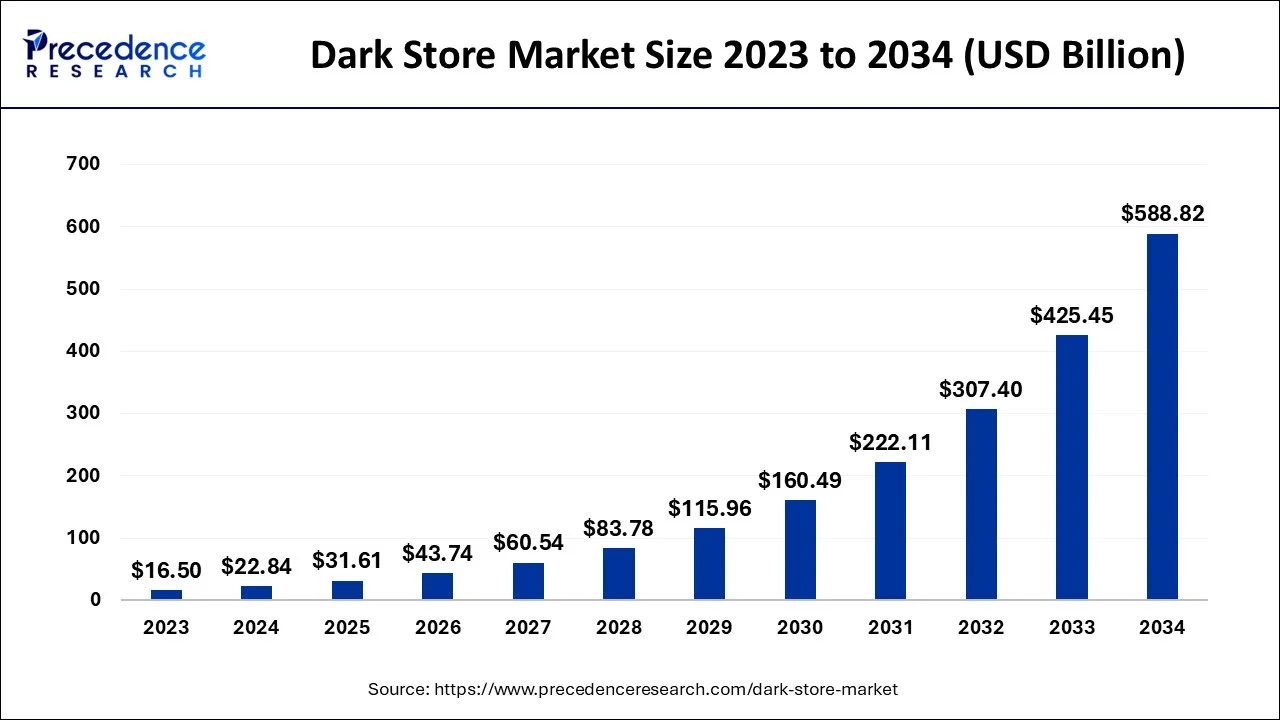
by The global dark store market was valued at USD 31.61 billion in 2025 and is projected to reach approximately USD 721.98 billion by 2035, growing at a remarkable CAGR of 36.73% from 2026 to 2035. The market’s growth is being fueled by the increasing popularity of online grocery shopping, the rapid expansion of e-commerce platforms, and retailers’ growing emphasis on efficient, fast, and cost-effective last-mile delivery solutions to meet rising consumer expectations.
What is a Dark Store?
A dark store is essentially a warehouse that resembles a supermarket but is dedicated solely to fulfilling online orders. These facilities stock thousands of products, including groceries, personal care items, household essentials, and packaged foods.
When customers place orders through an app or website, employees or automated systems pick, pack, and dispatch products directly from the dark store. Because these facilities are optimized for fulfillment rather than in-store shopping, they can process orders much faster than traditional retail stores.
Get Sample: https://www.precedenceresearch.com/sample/2461
Dark Store Market Overview
The rapid expansion of online shopping has fundamentally changed consumer expectations. Customers now demand same-day, one-hour, and even 10-minute delivery services. To meet these expectations, retailers are investing heavily in localized fulfillment networks.
Dark stores provide several advantages:
- Faster order processing
- Reduced delivery times
- Better inventory management
- Improved operational efficiency
- Enhanced customer satisfaction
Major retailers worldwide are incorporating dark stores into their omnichannel strategies, allowing them to seamlessly integrate online and offline retail operations.
Dark Store Market Growth
The rapid growth of e-commerce platforms worldwide has significantly increased the need for efficient order fulfillment solutions. Consumers are increasingly choosing online channels for purchasing groceries, household products, personal care items, and daily essentials. As order volumes continue to rise, retailers are investing heavily in dark store networks to ensure faster deliveries and improve customer satisfaction. The ability of dark stores to operate closer to consumers helps reduce transportation costs and enables quicker order processing.
Another major factor driving market growth is the emergence of quick commerce services. Companies offering deliveries within 10 to 30 minutes depend heavily on strategically located dark stores to fulfill orders rapidly. The expansion of smartphone usage, digital payment systems, and app-based shopping platforms has further accelerated demand for dark store infrastructure. Retailers are also adopting advanced technologies such as artificial intelligence, robotics, and automated inventory management systems to improve operational efficiency and support growing demand.
Dark Store Market Trends
Increasing Adoption of Automation
- Dark store operators are integrating robotics, automated picking systems, and smart inventory management solutions to improve efficiency.
- Automation helps reduce human errors, accelerate order fulfillment, and lower operating costs.
Growth of Quick Commerce Networks
- Quick commerce providers are rapidly expanding dark store facilities in urban and suburban locations.
- The trend is enabling ultra-fast delivery services and improving customer convenience.
Expansion Beyond Grocery Products
- Dark stores are increasingly handling categories such as electronics, pharmaceuticals, beauty products, and household goods.
- This diversification is creating additional revenue opportunities for retailers and fulfillment providers.
Integration of Artificial Intelligence
- AI-powered forecasting and analytics tools are helping companies predict demand and optimize inventory levels.
- These technologies improve stock availability while reducing waste and operational inefficiencies.
Read More: Generic Drugs Market
Dark Store Market Dynamics
Driver
The primary driver of the dark store market is the growing demand for faster delivery services. Consumers increasingly expect same-day or even instant delivery of products purchased online. Dark stores enable retailers to store inventory closer to customers, significantly reducing delivery times and improving overall shopping experiences. The continuous growth of e-commerce and online grocery platforms is further strengthening market demand.
Opportunity
The expansion of quick commerce services into smaller cities and emerging markets presents significant opportunities for dark store operators. As internet penetration and smartphone adoption continue to increase globally, retailers can establish localized fulfillment centers to serve previously underserved regions. Technological advancements in automation and artificial intelligence also offer opportunities to improve operational efficiency and profitability.
Challenge
One of the major challenges facing the market is the high initial investment required to establish and maintain dark store facilities. Costs associated with real estate, technology infrastructure, inventory management systems, and delivery fleets can be substantial. Additionally, increasing competition among quick commerce providers and evolving regulatory requirements may create operational challenges for market participants.
How E-Commerce is Fueling Dark Store Demand
The rapid growth of e-commerce has become one of the most significant factors driving demand for dark stores worldwide. As consumers increasingly prefer online shopping for groceries, household essentials, electronics, and personal care products, retailers are under pressure to fulfill orders quickly and efficiently. Traditional retail stores often struggle to handle large volumes of online orders while simultaneously serving in-store customers, creating a need for dedicated fulfillment facilities.
Dark stores address this challenge by functioning exclusively as order fulfillment centers for online purchases. Their layouts are optimized for fast picking, packing, and dispatching of products, allowing retailers to process orders more efficiently than conventional stores. As e-commerce sales continue to grow globally, businesses are expanding their dark store networks to reduce delivery times, improve inventory management, and enhance customer satisfaction. The increasing demand for same-day and next-day deliveries is expected to further accelerate dark store adoption across the retail sector.
Technology Transforming Dark Store Operations
Technology is playing a crucial role in enhancing the efficiency and effectiveness of dark store operations. Modern dark stores are equipped with advanced inventory management systems, real-time tracking tools, and digital order processing platforms that streamline fulfillment workflows. These technologies help retailers maintain accurate stock levels, reduce errors, and improve order accuracy.
Cloud-based solutions and data analytics platforms are also transforming how dark stores operate. By analyzing customer purchasing patterns and inventory movement, retailers can make informed decisions regarding stock replenishment and product placement. Additionally, mobile applications and integrated logistics systems enable seamless coordination between warehouses, delivery personnel, and customers, ensuring faster and more reliable order fulfillment. As technology continues to evolve, dark stores are becoming smarter, more efficient, and better equipped to meet growing consumer expectations.
Applications in the Market
Dark stores play a crucial role in supporting modern retail and e-commerce operations. They are widely used for grocery fulfillment, quick commerce deliveries, pharmaceutical distribution, and household essentials management. Retailers leverage dark stores to improve inventory accuracy, reduce delivery times, and enhance customer satisfaction. These facilities also support omnichannel retail strategies by enabling businesses to seamlessly integrate online and offline operations. As consumer demand for convenience continues to increase, dark stores are becoming an essential component of retail supply chains worldwide.
Case Study Quick Commerce Expansion in India
India has emerged as one of the fastest-growing markets for dark store adoption. Leading quick commerce companies such as Blinkit, Zepto, and Swiggy Instamart have established extensive dark store networks across major metropolitan areas. By strategically locating fulfillment centers close to residential neighborhoods, these companies have successfully introduced delivery services within 10 to 20 minutes.
The success of these business models demonstrates the effectiveness of dark stores in reducing delivery times and improving customer experiences. As competition intensifies, companies continue to invest in automation, data analytics, and network expansion to strengthen their market positions and improve operational efficiency.
Regional Analysis
North America
North America holds a significant share of the dark store market due to the strong presence of e-commerce companies, advanced logistics infrastructure, and high consumer demand for convenience. Retailers across the United States and Canada are investing heavily in automated fulfillment centers and same-day delivery networks. The region continues to witness technological advancements that support dark store operations and improve supply chain efficiency.
Europe
Europe has been among the early adopters of dark store concepts, particularly in countries such as the United Kingdom, Germany, and France. The growth of online grocery shopping and increasing consumer preference for rapid deliveries are driving market expansion across the region. Retailers are also adopting sustainable delivery practices and automation technologies to enhance competitiveness.
Asia-Pacific
Asia-Pacific is expected to register the fastest growth during the forecast period. Rapid urbanization, rising internet penetration, expanding middle-class populations, and the growing popularity of quick commerce services are fueling demand for dark stores. Countries such as India, China, Japan, and South Korea are witnessing substantial investments in fulfillment infrastructure and logistics technology.
Latin America
The dark store market in Latin America is gaining momentum as e-commerce adoption increases and retailers seek efficient fulfillment solutions. Growing smartphone usage and digital payment adoption are supporting online shopping growth across the region. Companies are gradually expanding dark store networks to meet rising consumer expectations.
Middle East and Africa
The Middle East and Africa region is experiencing steady growth in the dark store market due to expanding digital commerce ecosystems and increasing investments in logistics infrastructure. Urban development projects and growing consumer demand for convenient shopping experiences are expected to create new opportunities for market participants in the coming years.
Future Outlook
The future of the dark store market appears highly promising as retailers continue to prioritize speed, convenience, and operational efficiency. The increasing adoption of quick commerce, artificial intelligence, robotics, and automated fulfillment technologies will further transform dark store operations. Businesses are expected to expand their networks into emerging cities and underserved regions to capture new customer segments.
As online shopping becomes increasingly integrated into everyday life, dark stores will play an even more critical role in supporting modern retail ecosystems. Companies that invest in technology, strategic location planning, and efficient logistics systems will be well-positioned to capitalize on the substantial growth opportunities expected over the next decade.
You can place an order or ask any questions. Please feel free to contact us at [email protected] |+1 804 441 9344
