
 by
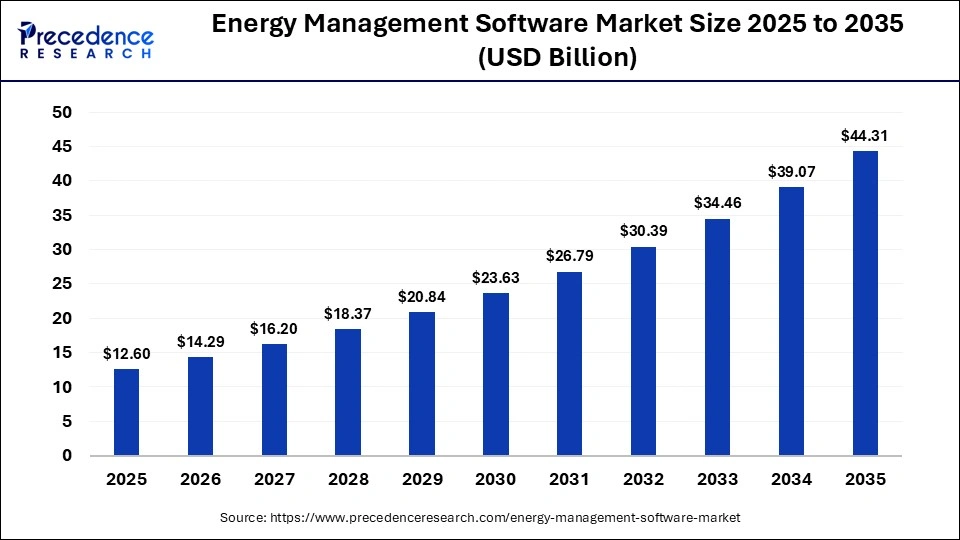
by The global energy management software market is witnessing significant expansion as organizations increasingly prioritize energy efficiency, sustainability, and cost optimization. The market was valued at USD 12.60 billion in 2025 and is projected to grow from USD 14.29 billion in 2026 to USD 44.31 billion by 2035, registering a robust CAGR of 13.40% during the forecast period.
The rising cost of energy, stringent environmental regulations, and growing emphasis on reducing carbon emissions are driving the adoption of advanced energy management software. These platforms provide real-time insights into energy consumption, enabling organizations to optimize usage, reduce waste, and improve operational efficiency.
Read Also: Long-Term Care Software Market
Quick Insights
The energy management software market reached USD 12.60 billion in 2025 and is expected to hit USD 44.31 billion by 2035, growing at a CAGR of 13.40%. North America dominated the market with approximately 35% share, while Asia Pacific is projected to grow at the fastest CAGR of 16.5%. Energy monitoring & analytics software led with around 30% share, cloud-based deployment accounted for nearly 60%, and industrial & manufacturing remained the leading end-use sector with about 30% share.
Why is Energy Management Software Becoming a Business Imperative?
Organizations across industries are facing increasing pressure to reduce operational costs and meet sustainability targets. Energy management software provides a centralized platform to monitor, analyze, and optimize energy consumption in real time.
By leveraging these solutions, businesses can identify inefficiencies, reduce energy waste, and achieve significant cost savings. Additionally, these platforms support compliance with environmental regulations, making them essential for modern enterprises.
How is Artificial Intelligence Transforming Energy Management?
Artificial intelligence is revolutionizing energy management by enabling predictive analytics and intelligent automation. AI-powered systems analyze historical and real-time data to forecast energy demand, optimize load distribution, and detect anomalies in energy usage.
Furthermore, AI-driven predictive maintenance helps organizations identify potential equipment failures before they occur, reducing downtime and improving operational efficiency. This shift toward intelligent energy systems is enhancing both cost savings and sustainability outcomes.
What are the Key Growth Drivers of the Market?
The increasing focus on sustainability and carbon reduction is a major driver of market growth. Governments and organizations worldwide are implementing stringent regulations and targets to reduce greenhouse gas emissions, encouraging the adoption of energy management solutions.
Another key factor is the rapid digitalization of energy infrastructure. The integration of IoT devices, smart grids, and advanced analytics is enabling real-time monitoring and optimization of energy consumption across industries.
What Opportunities and Trends are Shaping the Market?
Is Decentralized Energy Management Creating New Opportunities?
Yes, the growing adoption of distributed energy resources such as solar and wind power is driving demand for decentralized energy management solutions.
Are ESG and Carbon Tracking Driving Software Adoption?
Absolutely. Organizations are increasingly using energy management platforms to monitor carbon emissions and achieve their ESG (Environmental, Social, and Governance) goals.
Is Cloud-Based Energy Management Becoming the Standard?
Yes, cloud-based platforms offer scalability, flexibility, and real-time insights, making them the preferred choice for businesses across industries.
Regional Analysis
North America continues to dominate the energy management software market due to advanced infrastructure, strong regulatory frameworks, and high adoption of digital technologies.
Asia Pacific is expected to grow at the fastest rate, driven by rapid industrialization, urbanization, and increasing investments in smart grid and smart city initiatives in countries such as India and China.
Europe also holds a significant share, supported by stringent environmental regulations and a strong focus on carbon neutrality.
Segmental Analysis
By Software Type
| Segment | Market Position |
|---|---|
| Energy Monitoring & Analytics | Dominant |
| Carbon & Sustainability Management | Fastest Growing |
| Demand Response Management | Growing |
| Utility Bill Management | Stable |
| DER Management Software | Emerging |
By Deployment Mode
| Deployment | Market Trend |
|---|---|
| Cloud-Based | Leading |
| On-Premise | Declining |
| Hybrid | Growing |
By End-Use Industry
| Industry | Market Position |
|---|---|
| Industrial & Manufacturing | Dominant |
| Energy & Utilities | Strong Growth |
| Commercial Buildings | Growing |
| Residential | Fastest Growing |
| IT & Data Centers | Emerging |
By Application
| Application | Market Trend |
|---|---|
| Energy Optimization | Leading |
| Carbon Tracking | Fastest Growing |
| Predictive Maintenance | Growing |
| Load & Grid Management | Stable |
Competitive Landscape and Key Companies
The market is highly competitive, with global technology leaders focusing on innovation and sustainability. Key players include:
- Schneider Electric
- Siemens AG
- Honeywell International Inc.
- IBM Corporation
- Oracle Corporation
- Johnson Controls
- ABB Ltd.
- General Electric
These companies are investing in AI-powered analytics, smart grid solutions, and cloud-based platforms to strengthen their market position.
What Challenges Could Impact Market Growth?
Are High Implementation Costs a Barrier?
Yes, the initial investment required for deploying energy management software can be significant, particularly for small and medium enterprises.
Is Data Integration a Complex Challenge?
Integrating energy management systems with existing infrastructure can be complex and requires significant technical expertise.
Case Study: AI-Driven Energy Optimization in Industrial Facilities
Industrial organizations adopting AI-powered energy management software have achieved significant reductions in energy consumption and operational costs. By leveraging predictive analytics and real-time monitoring, these companies have improved efficiency while reducing their carbon footprint.
Conclusion
The energy management software market is rapidly evolving as a key enabler of digital and sustainable transformation. With advancements in AI, IoT, and cloud computing, the market is expected to witness strong growth through 2035 as organizations prioritize efficiency and environmental responsibility.
Get Sample Copy: https://www.precedenceresearch.com/sample/8351
For inquiries regarding discounts, bulk purchases, or customization requests, please contact us at [email protected]
