
 by
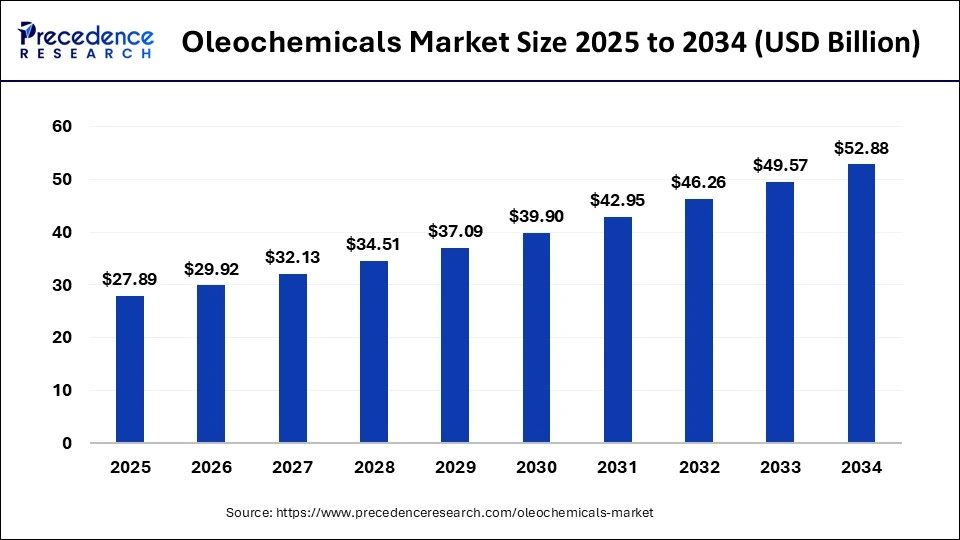
by The global oleochemicals market was valued at USD 26.01 billion in 2024 and is projected to grow from USD 27.89 billion in 2025 to approximately USD 52.88 billion by 2034, expanding at a CAGR of 7.35% from 2025 to 2034.
Asia Pacific Oleochemicals Market: Growth Projections 2025–2034
In 2024, the Asia Pacific oleochemicals market was valued at USD 10.96 billion, and it is anticipated to reach around USD 23.84 billion by 2034, growing at a CAGR of 8.08% from 2025 to 2034. This growth can be attributed to increasing demand from industries such as personal care, pharmaceuticals, and food sectors, coupled with substantial investments in production capabilities.
Regional Insights: Oleochemicals Market Share by Region (2024)
India
India’s oleochemicals market is rapidly growing due to the rising demand from personal care, pharmaceuticals, and food industries. The Indian government’s focus on sustainable and eco-friendly chemical solutions has driven substantial investments, which are expected to create hundreds of new jobs in advanced manufacturing plants, particularly in Gujarat.
North America
North America is poised for significant oleochemicals market growth during the forecast period. Government regulations promoting sustainability, coupled with growing demand for bio-based products, are major drivers. The U.S. government’s initiatives supporting renewable resources, especially biofuels, are likely to further stimulate market growth.
Europe
In Europe, the oleochemicals market is seeing robust growth, fueled by the increasing demand for sustainable, biodegradable products. The rise of eco-friendly alternatives in sectors like personal care, cosmetics, and lubricants, combined with the expansion of bio-based solutions, has bolstered the market. The UK’s oleochemical market, in particular, has shifted towards renewable feedstocks in response to stringent environmental regulations and consumer demand for green products.
Middle East & Africa
The Middle East and Africa (MEA) region, rich in natural resources like palm oil, is becoming a significant player in the oleochemical industry. With increasing demand for sustainable products, manufacturers are turning to oleochemicals for biodegradable solutions. Stricter regulations in the UAE and Saudi Arabia are encouraging this shift, driving production in the region.
View Sample: https://www.precedenceresearch.com/sample/1693
Market Overview: Oleochemicals Production and Trends
Oleochemicals, derived primarily from plant oils, are used in a variety of applications, including cosmetics, pharmaceuticals, and lubricants. The growing demand for renewable and sustainable bio-based chemicals is expected to fuel market growth across different sectors. Additionally, oils and fats, which are critical to oleochemical production, are seeing increased demand as the need for environmentally friendly solutions grows.
The pandemic led to a temporary slowdown in production due to disruptions in supply chains and restrictions in manufacturing activities, particularly in key markets like China. However, the market is set to recover, with increasing global concerns about fossil fuel depletion and pollution contributing to the demand for biofuels such as biodiesel, derived from natural oils and fats.
Market Growth Drivers
-
Rising Demand in End-User Industries
The increasing use of oleochemicals in personal care, pharmaceuticals, and cleaning products is driving market growth. Companies like Procter & Gamble import large quantities of oleochemicals, further supporting the demand. -
Environmental Regulations
As environmental regulations become stricter, oleochemicals, which are bio-based and renewable, are increasingly being used as substitutes for petroleum-based chemicals. This trend is especially prominent in the cosmetics, food, and pharmaceutical industries. -
Growth in Biofuels
The rise in biofuel demand, particularly biodiesel, presents significant growth opportunities for the oleochemical market. Biofuels are made from natural oils and fats, thus increasing demand for oleochemical feedstocks.
Technological Advancements in Oleochemical Manufacturing
Technological innovations are key to the future growth of the oleochemicals market. Advances in microreactor technology and other cutting-edge methods are improving the efficiency and sustainability of oleochemical manufacturing. These technologies will make oleochemicals more competitive compared to traditional petrochemicals, while also enabling better integration in various industries.
Challenges in the Oleochemicals Market
-
Supply Chain Disruptions
Fluctuations in the prices of raw materials like palm oil and soy, combined with restrictions in global supply chains, pose challenges for producers. These disruptions can lead to price volatility and affect production costs. -
Regulatory Hurdles
Although governments are increasingly supporting renewable chemicals, navigating complex regulations remains a challenge. Businesses must invest in R&D to improve production processes and comply with regulatory frameworks, especially in developed markets.
Products and Applications in the Oleochemicals Market
Product Segments
-
Fatty Acids: Widely used in surfactants, detergents, and industrial lubricants.
-
Specialty Esters: Used in cosmetics, rubber, and as lubricants in pharmaceutical applications.
-
Glycerol Esters: Popular in personal care products and pharmaceuticals.
Application Segments:
-
Personal Care & Cosmetics: The demand for natural, organic skincare and haircare products is expected to drive this segment’s growth.
-
Food & Beverages: Glycerol derivatives are increasingly used in food products, stabilizers, and thickeners.
-
Pharmaceuticals: Oleochemicals are used in the production of various pharmaceutical products, driving market demand.
Form and Feedstock Insights
Form
Liquid oleochemicals dominate the market due to their wide usage in personal care items, industrial oils, and biodiesel production. Their ease of handling and blending make them preferred in various applications.
Feedstock
Palm oil continues to be the dominant feedstock for oleochemical production, owing to its affordability and availability. However, growing concerns about the environmental impact of palm oil production have led to increased focus on sustainable sourcing and exploring alternative feedstocks.
Recent Developments
-
Perstorp Group: In June 2025, Perstorp introduced a range of synthetic polyol esters designed to meet the performance and environmental requirements of the lubricant sector.
-
OQ Chemicals: In December 2024, OQ Chemicals divested its esters facility to Perstorp as part of a strategic move to enhance operational efficiency.
-
Ecoscience International: In January 2025, Ecoscience introduced an advanced water treatment solution to address the environmental challenges associated with palm oil milling.
Key Companies in the Oleochemicals Market
-
SABIC
-
Godrej Industries Limited
-
Emery Oleochemicals LLC
-
Oleon NV
-
KLK Oleo
-
Kao Corporation
Read Also: Cosmetic Ingredients Market
For inquiries regarding discounts, bulk purchases, or customization requests, please contact us at sales@precedenceresearch.com
