
 by
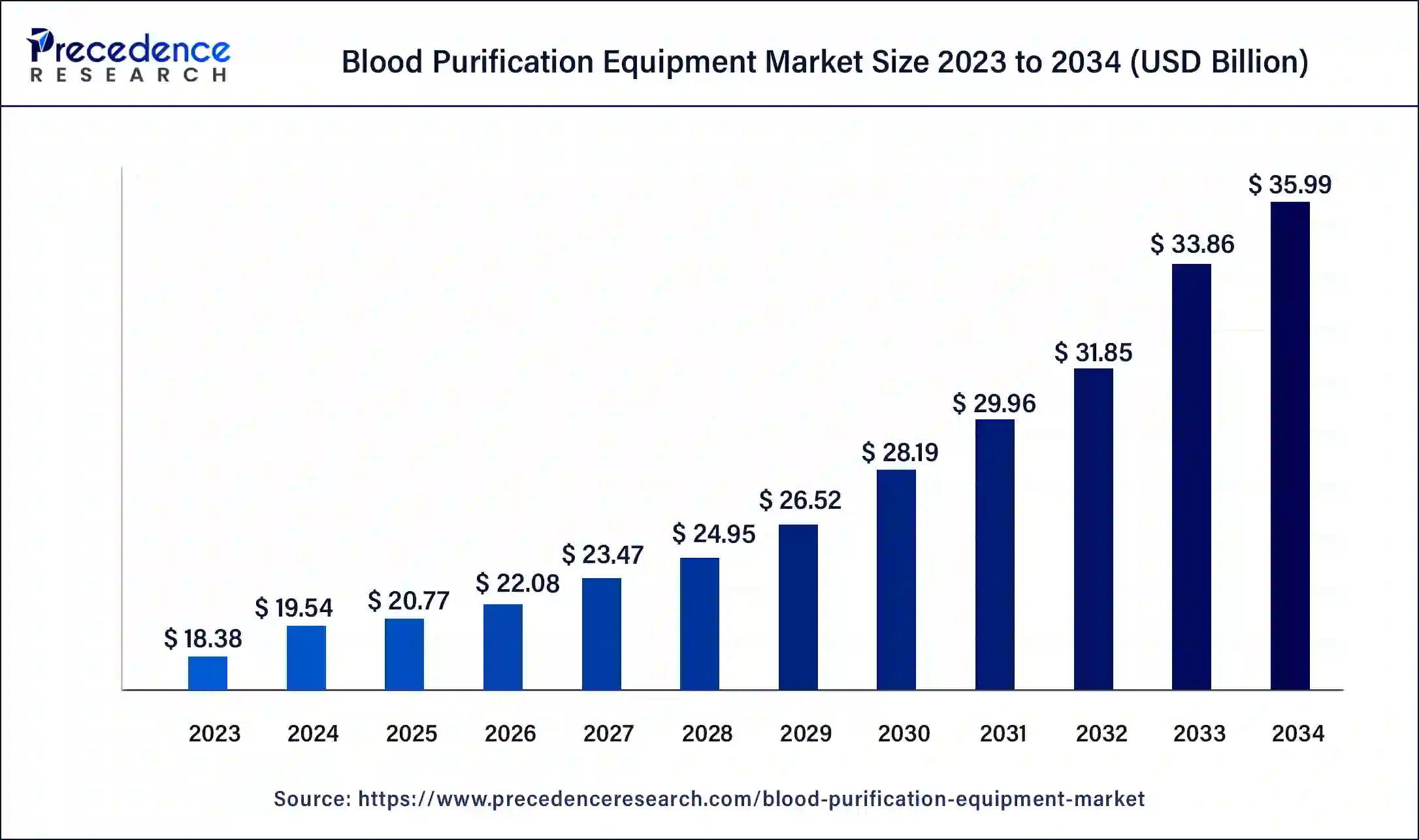
by The global blood purification equipment market is witnessing substantial growth due to increasing prevalence of kidney and blood-related disorders, rising geriatric population, and technological advancements in dialysis and filtration procedures. The market, valued at USD 19.54 billion in 2024, is projected to reach USD 35.99 billion by 2034, expanding at a CAGR of 6.3% during the forecast period 2025–2034.
Read Also: Hydrogen Market
Key Takeaways: Blood Purification Equipment Market
-
Market Size in 2025: USD 20.77 billion
-
Market Size by 2034: USD 35.99 billion
-
CAGR (2025–2034): 6.3%
-
Dominant Region: North America
-
Leading Product Type: Dialysis
-
Top Revenue Product Segment: Portable equipment (>80% revenue share in 2024)
-
Key Applications: Renal diseases, sepsis, chronic kidney disease/end-stage renal disease
-
Primary End-Users: Hospitals (general & specialty); Home-care settings showing rapid growth
Market Overview
Blood purification equipment is used to remove impurities from the blood and return purified blood to the patient’s body. These devices are crucial in treating renal and blood-related conditions, plasmapheresis, immune metabolic disorders, and life-support applications.
However, the high cost of equipment, procedural risks, and limited availability in underdeveloped regions may hinder growth in some markets. The COVID-19 pandemic also disrupted supply chains and reduced access to healthcare services, impacting market growth temporarily.
Blood Purification Equipment Market Growth Factors
-
Technological Advancements: Improved dialysis, filtration, and absorption techniques enhance efficiency and safety.
-
Rising Prevalence of Kidney Disorders: Increasing cases of chronic kidney disease (CKD), end-stage renal disease (ESRD), hypertension, and diabetes drive demand.
-
Aging Population: A Growing geriatric population increases susceptibility to kidney-related disorders.
-
Clinical Adoption: Hospitals and home-care centers increasingly adopt advanced blood purification therapies.
Market Restraints
-
High Costs: Dialysis and other blood purification procedures are expensive, limiting accessibility in developing countries.
-
Infrastructure Limitations: Lack of advanced healthcare facilities and dialysis centers in rural regions restricts market expansion.
-
Procedure Risks: Awareness of potential side effects can discourage adoption.
Opportunities
-
Home-Care Adoption: Increasing preference for home-based dialysis solutions.
-
Health Awareness & Reimbursement: Better healthcare access and insurance coverage encourage the use of advanced blood purification procedures.
-
Technological Innovations: New devices offering faster and safer treatment are expected to boost market growth.
Market Segmentation
By Type
-
Dialysis: Dominant segment, preferred due to efficiency and proven efficacy.
-
Filtration and Others: Used in specialized treatments for immune and metabolic disorders.
By Modality
-
Hemodialysis (HD): Largest segment in 2024, including dialyzers, bloodlines, AV fistula needles, and cartridges.
-
Continuous Renal Replacement Therapy (CRRT): Rapid growth due to use in acute kidney injury (AKI) and ICU care.
-
Hemoperfusion & Plasma Exchange: Used for toxin removal, sepsis, and autoimmune disorders.
By Application / Clinical Indication
-
Chronic Kidney Disease / ESRD: Major revenue contributor, driven by rising prevalence and home dialysis adoption.
-
Sepsis & Septic Shock: Projected to grow significantly due to increased incidence and adoption of advanced therapies.
-
Other Applications: Acute kidney injury, autoimmune and neurological disorders, post-transplantation care, liver support therapy, pediatric and neonatal treatments.
By End-User
-
Hospitals (General & Specialty): Dominant segment in 2024.
-
Home-Care Settings: Rapidly growing segment due to patient preference and convenience.
-
Dialysis Centers & ICUs: High adoption of specialized blood purification equipment.
By Application / Clinical Indication
-
Chronic Kidney Disease / ESRD: Major revenue contributor, driven by rising prevalence and home dialysis adoption.
-
Sepsis & Septic Shock: Projected to grow significantly due to increased incidence and adoption of advanced therapies.
-
Other Applications: Acute kidney injury, autoimmune and neurological disorders, post-transplantation care, liver support therapy, pediatric and neonatal treatments.
By End-User
-
Hospitals (General & Specialty): Dominant segment in 2024.
-
Home-Care Settings: Rapidly growing segment due to patient preference and convenience.
-
Dialysis Centers & ICUs: High adoption of specialized blood purification equipment.
Regional Insights
-
North America: Dominates due to advanced healthcare infrastructure, awareness of blood purification therapies, and high prevalence of kidney-related disorders.
-
Asia Pacific: Significant growth potential driven by a large population with chronic diseases, increasing healthcare awareness, and rising adoption of advanced equipment.
-
Europe, Latin America, MEA: Moderate growth supported by rising demand for renal care and technological advancements.
Leading Companies in the Blood Purification Equipment Market
-
Cytosorbents Corporation
-
Baxter International, Inc.
-
Cerus Corporation
-
Jafron Biomedical Co., Ltd.
-
Spectra Medical, Inc.
-
B. Braun Melsungen AG
-
Nikkiso Co, Ltd
-
ExThera Medical Corporation
-
Aethlon Medical, Inc.
-
Fresenius SE & Co. KGaA
For inquiries regarding discounts, bulk purchases, or customization requests, please contact us at sales@precedenceresearch.com
