
 by
by Robotic Refueling System Market Size in 2026
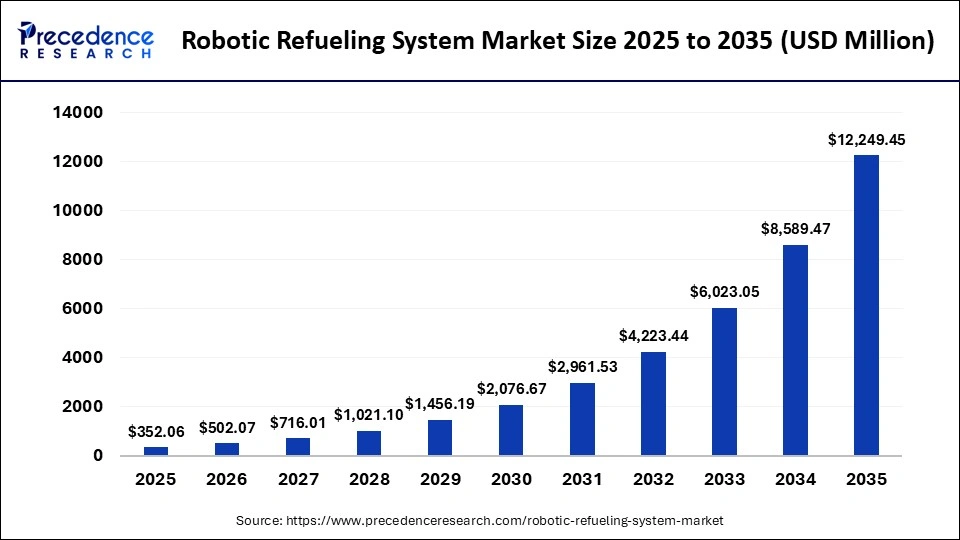
The global robotic refueling system market is projected to reach USD 502.07 million in 2026, growing from USD 352.06 million in 2025. This market is expected to witness exponential expansion, reaching approximately USD 12,249.45 million by 2035, registering a remarkable CAGR of 42.61% during the forecast period from 2026 to 2035.
Read Also: AI in Medical Billing Market
Expanded Market Overview
Robotic refueling systems represent a cutting-edge intersection of automation, robotics, and energy infrastructure. These systems are designed to autonomously refuel vehicles, aircraft, ships, and industrial equipment using advanced technologies such as:
- Robotic arms
- Computer vision
- AI-powered sensors
- Real-time monitoring systems
They significantly reduce human intervention, improve safety, and ensure precision in hazardous environments like fuel stations, airports, and defense zones.
The growing complexity of energy ecosystems—especially with the rise of electric vehicles (EVs) and hydrogen fuel systems—is accelerating the demand for intelligent and automated refueling infrastructure.
Key Market Highlights
- 2026 Market Size: USD 502.07 million
- 2035 Forecast: USD 12,249.45 million
- CAGR (2026–2035): 42.61%
- Leading Region (2025): North America (43% share)
- Fastest-Growing Region: Asia-Pacific
- Dominant Fuel Type: Hydrogen
- Fastest-Growing Fuel Type: Electricity
- Leading System Type: Fully automated systems
- Top Application Segment: Aerospace
Growth Drivers
1. Surge in Electric Vehicle Adoption
The rapid global adoption of EVs is a major catalyst for robotic refueling systems. Automated charging solutions are becoming essential to handle increasing demand efficiently, especially in high-traffic charging stations and fleet depots.
2. Increasing Demand for Automation
Industries are shifting toward automation to:
- Reduce labor costs
- Improve operational efficiency
- Ensure consistent service quality
Robotic refueling aligns perfectly with smart infrastructure and Industry 4.0 initiatives.
3. Safety and Hazard Reduction
Fueling environments often involve flammable substances and toxic fumes. Robotic systems:
- Minimize human exposure
- Detect leaks or fire risks early
- Enable emergency shutdowns
This makes them highly valuable in military, aerospace, and oil & gas sectors.
Impact of Artificial Intelligence (AI)
AI is a game-changer in robotic refueling systems. It enables:
- Precision alignment of fuel nozzles
- Real-time hazard detection (smoke, leaks)
- Predictive maintenance
- Autonomous decision-making
For example, AI-powered systems can automatically detect the fuel port of a vehicle and initiate refueling without any manual input, significantly improving efficiency and safety.
Emerging Market Trends
Autonomous Refueling Stations
Fuel providers are investing in fully automated, staff-free fueling stations, particularly in technologically advanced countries.
Growth of Autonomous Fleets
The expansion of self-driving vehicles and logistics fleets is increasing the need for hands-free refueling solutions.
Dual-Arm Robotics
New innovations like dual-arm robots allow simultaneous fueling, reducing time and increasing throughput in high-demand environments.
Integration with Smart Grids
Robotic charging systems are increasingly integrated with IoT and smart grid technologies to optimize energy distribution and usage.
Segment Insights
By Fuel Type
- Hydrogen dominated in 2025 due to safety requirements and precision handling
- Electricity is the fastest-growing segment due to EV expansion
By System Type
- Fully automated systems led the market due to zero human intervention
- Semi-automated systems are gaining traction for cost-effective deployment
By Application
- Aerospace dominates due to high demand for efficient aircraft refueling
- Marine is the fastest-growing due to complex fueling requirements
By End Use
- Commercial sector leads due to fleet and logistics demand
- Military sector is growing fastest due to safety and automation needs
Regional Insights
North America
North America leads the market due to:
- Advanced automation infrastructure
- Strong presence of defense and aerospace industries
- Rapid EV adoption
Asia-Pacific
Asia-Pacific is the fastest-growing region driven by:
- Expanding EV and hydrogen ecosystems
- Government initiatives for automation
- Growing industrial and logistics sectors
Countries like China and India are rapidly investing in smart fueling infrastructure.
Competitive Landscape
Major companies operating in the robotic refueling system market include:
- ABB Ltd.
- KUKA AG
- Fuelmatics AB
- Airbus SE
- FANUC Corporation
- Komatsu Ltd.
- Hitachi Construction Machinery
These players are focusing on AI integration, automation innovation, and strategic partnerships to strengthen their market presence.
Recent Developments
- March 2026: NextNRG launched an AI-driven platform for automated EV refueling
- September 2025: Astroscale introduced REFLEX-J robotic refueling spacecraft
- April 2025: Boeing launched advanced aerial refueling systems for defense applications
Conclusion
The robotic refueling system market is poised for explosive growth, driven by automation, AI integration, and the global transition toward electric and hydrogen-based mobility. With a CAGR of over 42%, the market is transforming traditional fueling infrastructure into a fully autonomous, intelligent ecosystem.
As industries continue to prioritize efficiency, safety, and sustainability, robotic refueling systems will play a critical role in shaping the future of energy and transportation.
Get Sample Copy: https://www.precedenceresearch.com/sample/8230
For inquiries regarding discounts, bulk purchases, or customization requests, please contact us at sales@precedenceresearch.com
