
 by
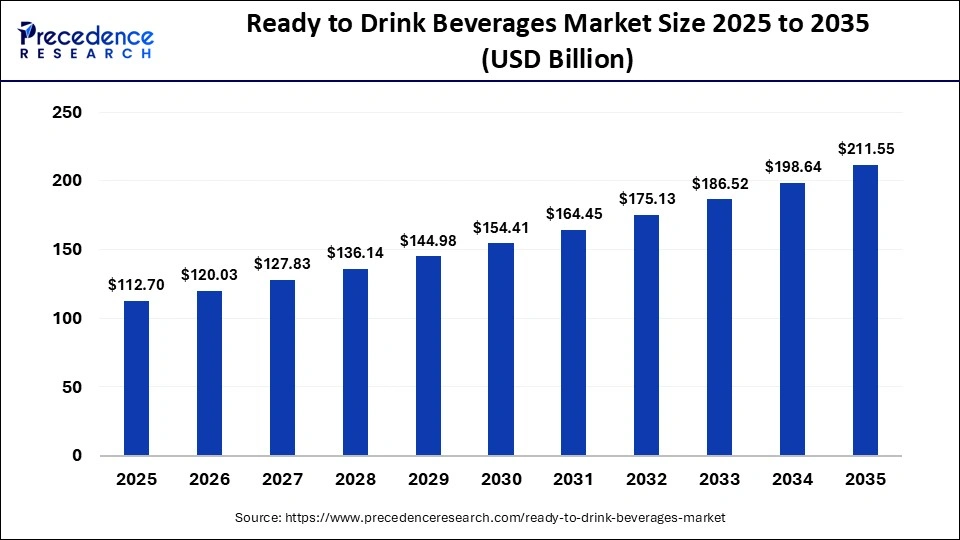
by The global ready to drink beverages market is witnessing robust expansion, projected to grow from USD 120.03 billion in 2026 to USD 211.55 billion by 2035, registering a CAGR of 6.50%. This growth reflects a fundamental shift in global consumption patterns, where convenience, health, and innovation intersect to redefine the beverage industry.
The market, valued at USD 112.70 billion in 2025, is increasingly driven by consumer demand for functional drinks, protein-enriched beverages, and portable hydration solutions. Rapid urbanization and evolving dietary preferences are accelerating adoption, positioning RTD beverages as a daily consumption essential rather than an occasional convenience product.
Read Also: Data Converter Market
Quick Insights: Market Highlights in Motion
- The global RTD beverages market is expected to reach USD 211.55 billion by 2035, growing at a CAGR of 6.50%.
- North America dominated the market with a 38% share in 2025 due to strong retail infrastructure and premium product demand.
- Non-alcoholic beverages led the market with a 75% share, reflecting mass consumption across demographics.
- Retail stores accounted for 65% of distribution, highlighting the continued dominance of physical retail channels.
- Cans emerged as the leading packaging format with a 45% share, driven by portability and sustainability benefits.
- Leading companies including Coca-Cola, PepsiCo, Nestlé, and Red Bull are driving innovation and global expansion.
How is the RTD Beverages Market Transforming Modern Consumption?
The RTD beverages market has evolved from a convenience-driven segment into a health-oriented ecosystem. Today’s consumers are not just seeking hydration—they are looking for beverages that deliver functional benefits such as immunity support, energy enhancement, and nutritional supplementation.
This transformation is fueled by a broader shift in global dietary habits, where processed and ready-to-consume products are becoming mainstream. RTD beverages, processed through technologies like pasteurization and aseptic packaging, offer safety, extended shelf life, and consistent quality—making them ideal for modern lifestyles.
What Role is Artificial Intelligence Playing in Market Evolution?
Artificial intelligence is becoming a critical enabler of innovation in the RTD beverages market. Companies are leveraging AI-driven analytics to decode consumer preferences, enabling the rapid development of personalized and functional beverages tailored to specific health needs.
In addition, AI is optimizing supply chain efficiency, reducing waste, and enhancing inventory management. From demand forecasting to targeted marketing campaigns, AI is empowering beverage companies to operate with greater agility and precision in an increasingly competitive environment.
What are the Key Growth Drivers Shaping the Market?
Why is Functional Nutrition Driving Demand?
Consumers are increasingly seeking beverages enriched with proteins, vitamins, and electrolytes. This demand for functional nutrition is a primary driver, enabling RTD beverages to serve as meal supplements and wellness products.
How is Urbanization Influencing Consumption Patterns?
Rapid urbanization is creating a strong demand for portable and ready-to-consume beverages. Busy lifestyles and time constraints are encouraging consumers to adopt RTD products as part of their daily routines.
Are Climate and Environmental Factors Impacting Demand?
Yes, rising global temperatures are increasing the consumption of hydration-focused beverages, particularly in tropical and subtropical regions, further boosting market growth.
What Opportunities and Trends are Defining the Future?
Are Plant-Based and Clean-Label Beverages the Next Big Thing?
Absolutely. The shift toward plant-based, low-sugar, and clean-label beverages is creating significant growth opportunities. Consumers are prioritizing transparency and sustainability, driving demand for natural ingredients.
How are Functional Ingredients Redefining Product Innovation?
Ingredients such as probiotics, herbal extracts, and protein blends are enabling brands to differentiate their offerings and target niche consumer segments.
Is Packaging Innovation Driving Competitive Advantage?
Yes, lightweight and eco-friendly packaging formats like cans, cartons, and pouches are gaining traction. These formats not only enhance convenience but also align with sustainability goals.
Can Personalization Unlock New Revenue Streams?
Personalized beverages tailored to individual health needs represent a significant growth opportunity. Leveraging data and AI, companies can create customized solutions for specific consumer segments.
Regional Analysis: Where is Growth Accelerating?
North America continues to dominate the market due to high consumer awareness, strong purchasing power, and a well-established retail network. The region’s focus on functional and premium beverages further strengthens its leadership position.
Asia Pacific is emerging as a high-growth region, driven by rising disposable incomes, urbanization, and increasing adoption of packaged beverages. Expanding e-commerce penetration and localized product innovations are further accelerating market growth.
Europe is also witnessing strong growth, supported by regulatory policies promoting healthier formulations and sustainable packaging practices.
Segment Analysis: Which Segments are Leading the Market?
The non-alcoholic beverages segment dominates due to its universal appeal and daily consumption patterns. Products such as bottled water, iced tea, and functional drinks are driving this segment’s growth.
Retail stores remain the primary distribution channel, offering accessibility and immediate product availability. However, online retail is gaining momentum, driven by the rise of e-commerce and digital purchasing behavior.
Cans lead the packaging segment due to their portability, durability, and recyclability, making them a preferred choice for both manufacturers and consumers.
The adult segment dominates consumption, supported by higher disposable income and frequent consumption of beverages such as coffee, tea, and energy drinks.
Competitive Landscape: Who are the Market Leaders?
Key players operating in the RTD beverages market include:
- The Coca-Cola Company
- PepsiCo, Inc.
- Nestlé S.A.
- Danone S.A.
- Red Bull GmbH
- Keurig Dr Pepper Inc.
- Monster Beverage Corporation
- Suntory Beverage & Food Limited
- The Kraft Heinz Company
- Unilever PLC
- Asahi Group Holdings, Ltd.
These companies are focusing on innovation, strategic acquisitions, and product diversification to maintain their competitive edge.
Recent Breakthroughs and Industry Developments
The market is witnessing significant innovation, particularly in functional beverages. PepsiCo’s launch of a prebiotic cola in 2026 highlights the growing focus on gut health and functional ingredients.
Additionally, the rapid growth of plant-based beverages, especially oat-based drinks, underscores the increasing consumer preference for sustainable and health-oriented options.
What Challenges are Impacting Market Growth?
Despite strong growth prospects, the RTD beverages market faces challenges such as intense competition and market saturation. The presence of numerous brands offering similar products is creating pricing pressures and reducing profit margins.
Supply chain disruptions and raw material price volatility are also impacting production costs, forcing companies to adopt strategic pricing and cost optimization measures.
Case Study: The Rise of Functional RTD Beverages
A notable trend in the market is the rapid adoption of functional beverages enriched with proteins, vitamins, and probiotics. These products are gaining popularity among health-conscious consumers, particularly in urban areas, where convenience and nutrition are key purchasing factors.
This trend demonstrates how RTD beverages are evolving into holistic lifestyle products, offering both convenience and health benefits.
Conclusion & Call to Action
The ready-to-drink beverages market is entering a transformative phase, driven by innovation, health consciousness, and evolving consumer lifestyles. As companies continue to invest in functional ingredients, sustainable packaging, and digital technologies, the market is poised for sustained growth through 2035.
Get Sample Copy: https://www.precedenceresearch.com/sample/8278
For inquiries regarding discounts, bulk purchases, or customization requests, please contact us at sales@precedenceresearch.com
