
 by
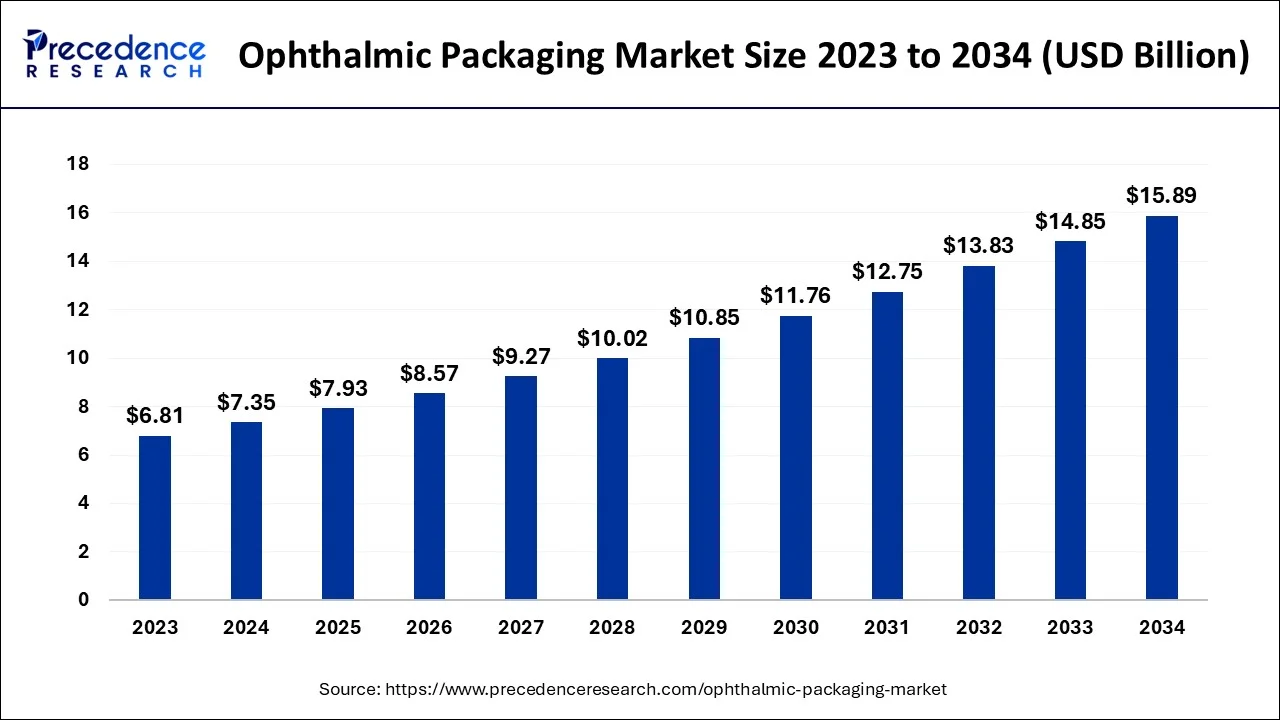
by The global ophthalmic packaging market size was estimated at USD 7.35 billion in 2024 and is projected to reach USD 15.89 billion by 2034, growing at a CAGR of 8.2% from 2025 to 2034. Growth is primarily fueled by the rising prevalence of eye disorders, the aging global population, and technological advancements in ophthalmic product packaging.
Ophthalmic packaging encompasses the design, production, and distribution of packaging materials specifically for eye care products, ensuring safety, sterility, and product integrity. Packaging formats include bottles, vials, ampoules, tubes, blister packs, and cartons, tailored for both prescription and over-the-counter (OTC) products.
Read Also: Recloser Market
What’s Driving the Ophthalmic Packaging Market?
Increasing Prevalence of Eye Disorders
The rising incidence of eye disorders such as glaucoma, cataracts, and age-related macular degeneration is a significant growth driver. In the U.S. alone, approximately 12 million adults aged 40 and older have visual impairments, with 1 million being blind. Children under 18 also account for around 6.8% of medically diagnosed eye issues. This growing patient base is increasing the demand for specialized ophthalmic packaging that preserves product sterility and efficacy.
Aging Population
The global population is aging rapidly. By 2030, 1.4 billion individuals will be 60 or older, doubling to 2.1 billion by 2050. An older population is more susceptible to eye disorders, driving demand for prescription ophthalmic products and safe, user-friendly packaging solutions.
Technological Advancements in Packaging
Plastic packaging, including medical-grade and eco-friendly polymers, is emerging as the fastest-growing segment. Multi-dose and single-dose packaging technologies provide convenience, improve patient adherence, and reduce contamination risk.
Challenges and Restraints
Environmental Concerns
Sustainability is becoming a key issue, as traditional plastic packaging contributes to environmental pollution. Market participants are investing in eco-friendly, recyclable packaging materials, balancing functionality with environmental responsibility.
Opportunities in the Market
Growth of E-commerce
The rise of e-commerce is expanding the demand for secure, tamper-evident, and informative packaging. For instance:
-
Online retail penetration in India is expected to grow from 4% in 2019 to 8% by 2025.
-
E-commerce adoption encourages packaging solutions that withstand shipping while providing convenience and safety.
Single Dose Eye Drop Packaging
Single-dose packaging is increasingly preferred for its hygiene, portability, and patient safety, particularly for chronic conditions or sensitive eyes.
Regional Insights
North America
-
Largest market with 36.85% share in 2024.
-
Growth driven by an aging population, technological innovation, and robust healthcare infrastructure.
-
Companies are adopting sustainable packaging practices to meet environmental regulations.
Asia-Pacific
-
Fastest-growing region at a CAGR of 8.8%.
-
Growth fueled by increased healthcare expenditure, expanding access to eye care, and rising awareness of eye health.
-
Key players include Amcor, SGD Pharma, Gerresheimer AG, Berry Global, and AptarGroup.
Key Market Players and Recent Developments
-
Amcor, Gerresheimer AG, West Pharmaceutical Services, AptarGroup, Inc., SCHOTT AG
-
Unither Pharmaceuticals (Jan 2025): Launched preservative-free multi-dose packaging with Aptar’s squeeze dispenser and Nemera’s Noveila tip.
-
Rite Dose (Apr 2025): Expanded sterile unit-dose capacity with a new Synthon packaging line for ophthalmic products.
Ophthalmic Packaging Market Segmentation (2025–2034)
By Material
-
Plastic – Fastest-growing segment; preferred for its lightweight, durability, cost-effectiveness, and ability to be molded into advanced formats. Increasing adoption of eco-friendly polymers supports sustainable packaging trends.
-
Glass – Traditional packaging; preferred for high chemical resistance and product stability.
-
Metal – Used in specialized applications; offers durability but limited flexibility for ophthalmic formulations.
By Product Type
-
Bottles & Vials – Dominant product type; widely used for both prescription and OTC ophthalmic solutions.
-
Blister Packs – Protect single-dose or multi-dose formulations; increasingly used for convenience and hygiene.
-
Ampoules – Used for sterile, single-use ophthalmic solutions.
-
Squeezable Tubes – Allow precise dosing; particularly used for gels, ointments, or viscous formulations.
By Application
-
Prescription Medication – Dominates the market; critical for managing chronic eye disorders such as glaucoma, cataracts, and retinal diseases. Requires sterile, tamper-evident packaging.
-
OTC Products – Fastest-growing segment; includes artificial tears, allergy eye drops, and redness relievers. Growth driven by consumer preference for self-care and easy access.
-
Medical Devices – Includes ophthalmic instruments and delivery systems that require protective, durable packaging.
By Dose
-
Multi-Dose – Dominant and fastest-growing segment; practical for chronic conditions, reduces packaging waste, and incorporates preservative-free technologies.
-
Single-Dose – Rapidly growing; preferred for hygiene, portability, and contamination prevention.
By Geography
-
North America – Largest market; driven by aging population, technological innovation, and robust healthcare infrastructure.
-
Europe – Stable growth; focus on regulatory compliance and sustainability in packaging.
-
Asia-Pacific – Fastest-growing market; supported by rising healthcare expenditure, growing awareness of eye health, and expanding access to eye care products.
-
Latin America – Moderate growth; demand driven by increasing healthcare infrastructure and urbanization.
-
Middle East & Africa – Growing adoption of ophthalmic products; investments in healthcare and awareness campaigns support market expansion.
For inquiries regarding discounts, bulk purchases, or customization requests, please contact us at sales@precedenceresearch.com

