
 by
by The global life science tools market, valued at USD 122.57B in 2023, is projected to reach USD 409.99B by 2033, growing at a 13% CAGR from 2024 to 2034.
Life Science Tools Industry Key Takeaways
- North America accounted for 43.28% of the market share in 2023.
- Europe held a 25.62% market share in 2023.
- The Asia Pacific region is experiencing the highest CAGR of 15% during the forecast period.
- In 2023, cell biology technology led the market with a 43.34% revenue share.
- The consumables segment dominated by product category, capturing 47.59% of revenue in 2023.
- Biotechnology and pharmaceutical companies contributed 34.35% of market revenue in 2023.
- Drug discovery and development emerged as the top application, generating 31.69% of revenue in 2023.
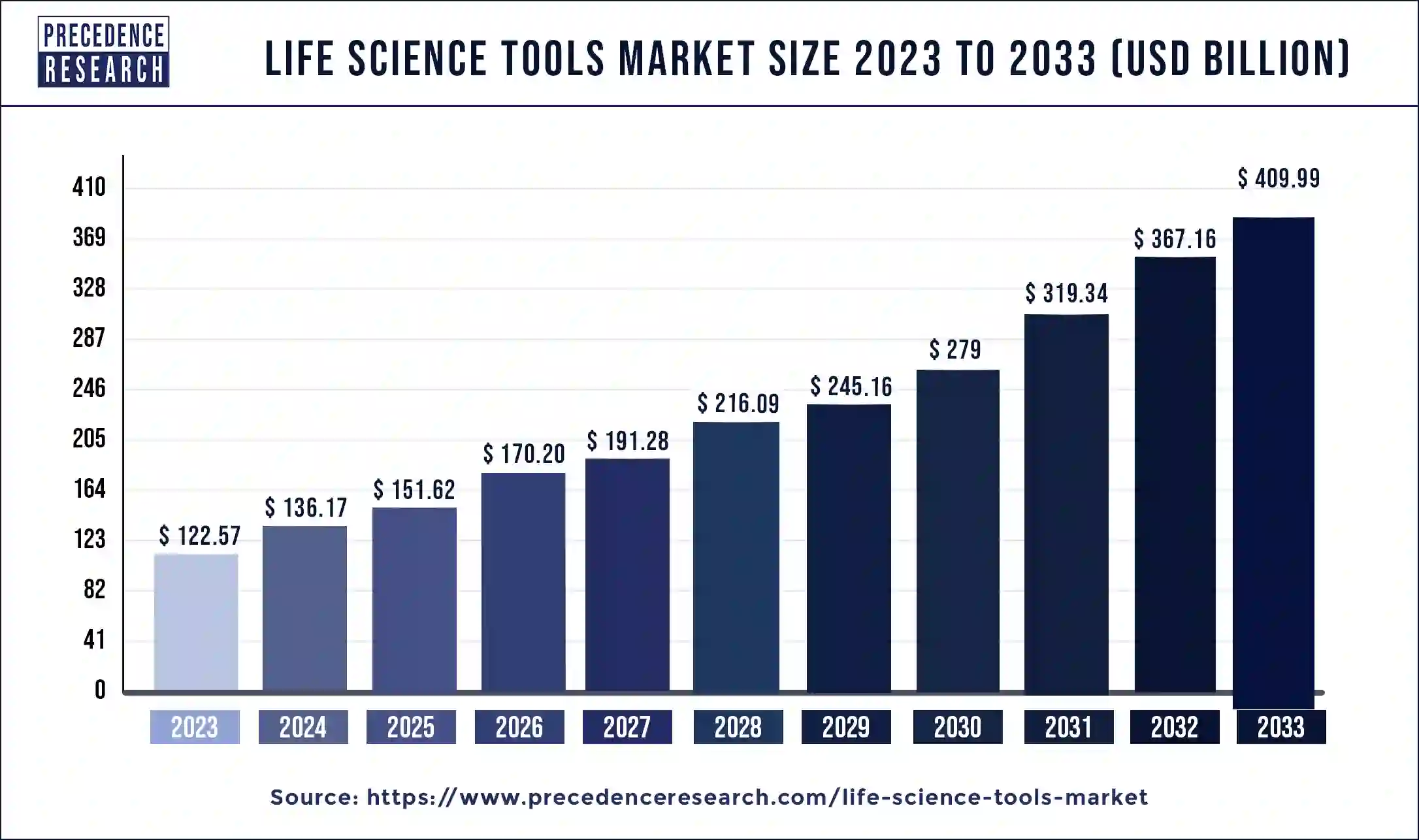
The Life Science Tools Market encompasses a wide range of instruments, reagents, and software used in research, diagnostics, and drug discovery. In 2023, the market was valued at USD 122.57 billion and is projected to reach USD 409.99 billion by 2033, growing at a CAGR of 13% from 2024 to 2034. North America led the market with a 43.28% share, followed by Europe at 25.62%, while the Asia Pacific region is experiencing the highest growth rate at 15% CAGR.
Among technologies, cell biology technology accounted for 43.34% of revenue in 2023. The consumables segment dominated by product type, capturing 47.59% of revenue. In terms of end-use, biotechnology and pharmaceutical companies contributed 34.35% of market revenue. The drug discovery and development segment generated the highest revenue share of 31.69% in 2023, highlighting the growing demand for innovative life science tools in medical and research applications.
Sample Link: https://www.precedenceresearch.com/sample/1064
Key Drivers
Opportunities
- Rising demand for personalized medicine and precision healthcare is driving innovation in life science tools.
- Advancements in genomics, proteomics, and cell biology are opening new research avenues.
- Increasing government funding and private sector investments in life sciences research support market expansion.
- Growth in emerging markets, particularly in Asia Pacific, presents lucrative opportunities for industry players.
- Expanding applications in drug discovery, diagnostics, and clinical research fuel demand for advanced tools.
- Integration of AI, automation, and data analytics in life science tools enhances research efficiency and accuracy.
Challenges
- High costs associated with advanced life science tools and research equipment may limit accessibility.
- Stringent regulatory frameworks and compliance requirements can slow product approvals and commercialization.
- Limited availability of skilled professionals in specialized life science research areas poses a challenge.
- Data security concerns related to cloud-based and AI-integrated tools may hinder adoption.
- Intense market competition and rapid technological advancements require continuous innovation and investment.
- Supply chain disruptions and fluctuating raw material costs may impact production and pricing.
Regional Insights
The Life Science Tools Market exhibits significant regional variations, with North America leading the industry, accounting for 43.28% of the market share in 2023. The region benefits from a strong presence of major biotechnology and pharmaceutical companies, substantial government funding, and advanced research infrastructure. Europe follows with a 25.62% market share, driven by increasing investments in life sciences research and a well-established healthcare system.
The Asia Pacific region is witnessing the highest growth, with a projected CAGR of 15%, fueled by rising healthcare expenditures, expanding biotechnology sectors, and growing adoption of advanced research tools in countries like China, India, and Japan. Latin America and the Middle East & Africa regions are experiencing steady growth, driven by increasing focus on healthcare modernization and rising collaborations between global life science companies and local research institutions. While North America and Europe dominate in terms of revenue, the Asia Pacific region presents lucrative opportunities due to rapid technological advancements and government initiatives supporting life science research.
Don’t Miss Out: High Potency Active Pharmaceutical Ingredients Market
Market Key Players
- Bruker Corporation
- Danaher Corporation
- GE Healthcare
- Hitachi, Ltd.
- Illumina, Inc.
- Merck KGaA
- Oxford Instruments plc
- Qiagen N.V.
- Shimadzu Corporation
- Thermo Fisher Scientific, Inc.
- ZEISS International
Recent News
The life science tools market is growing rapidly, driven by technological advancements and increased R&D investments. In 2024, it was valued at USD 164.9 billion and is projected to reach USD 311.1 billion by 2033, with a CAGR of 6.94%. The U.S. and Europe hold significant market shares, while the Asia Pacific region is experiencing the highest growth at a 15% CAGR. Key drivers include rising demand for personalized medicine, genomics, and AI integration in research. Despite challenges like high costs and regulatory hurdles, continuous innovation and expanding applications in healthcare and biotech are fueling market expansion.
Market Segmentation
By Technology
- Genomics
- Cell Biology
- Proteomics
- Stem Cell Research
- Immunology
By Product
- Consumables
- Instruments
- Services
By Application
- Drug Discovery and Development
- Clinical Diagnostics
- Genomic and Proteomic Research
- Cell Biology Research
- Others
By End-User
- Academic and Research Institutions
- Biotechnology and Pharmaceutical Companies
- Hospitals and Diagnostic Laboratories
- Contract Research Organizations (CROs)
- Government and Regulatory Agencies
