
 by
by 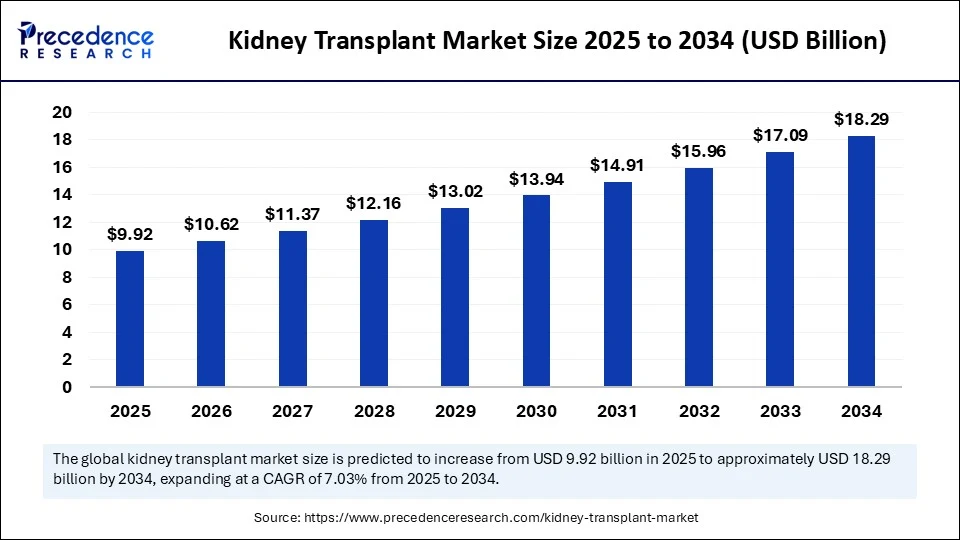
As the burden of chronic kidney disease rises globally, the kidney transplant market is emerging as a critical segment of the healthcare industry, offering life-extending solutions and reducing the economic pressure associated with dialysis.
Kidney Transplant Market Quick Insights
- The global kidney transplant market was valued at USD 7.04 billion in 2024 and is projected to reach approximately USD 12.32 billion by 2034, growing at a CAGR of 5.85% from 2025 to 2034.
- North America emerged as the largest regional market in 2024, while Asia Pacific is expected to witness the fastest growth during the forecast period.
- Hospitals represent the leading end-user segment in the market.
- Deceased donor transplants dominate the market by donor type.
- Key players operating in the kidney transplant industry include Novartis AG, TransMedics Inc., Terumo Corporation, Pfizer Inc., and BioMed Pvt. Ltd.
Market Revenue by Key Segments
| Segment | 2024 Value (USD Billion) | 2034 Forecast (USD Billion) |
|---|---|---|
| Donor Type (Deceased Donor) | Leading | Leading |
| End User (Hospitals) | Dominant | Dominant |
| Region (North America) | 2.93 | ~5.10 (Est.) |
How Is AI Revolutionizing the Kidney Transplant Market?
Can artificial intelligence reduce kidney transplant failure rates?
Yes, AI is playing a transformative role by enhancing donor-recipient matching, predicting graft rejection, and streamlining organ logistics. Advanced algorithms can now analyze genetic, immunologic, and lifestyle data to identify the most compatible matches, increasing post-transplant survival rates.
What is the role of machine learning in post-transplant care?
Machine learning tools are being integrated into post-operative care to monitor early signs of rejection, automate immunosuppressant dosage, and flag potential complications in real-time—reducing patient mortality and improving long-term outcomes. This tech-led shift is setting a new standard in precision medicine for organ transplants.
What’s Driving the Growth of the Kidney Transplant Market?
-
Rising Prevalence of ESRD and CKD: An increasing global burden of diabetes, obesity, and hypertension has resulted in a steep rise in end-stage renal disease cases.
-
Advances in Organ Preservation: Innovations in cold storage, normothermic machine perfusion, and ischemia-free transplantation are improving transplant success rates.
-
Government and NGO Support: Organ donation awareness campaigns and supportive transplant regulations are expanding donor pools and patient accessibility.
-
Technological Innovation in Surgical Tools: Robotic-assisted transplant surgeries and AI-powered diagnostics are improving surgical outcomes and post-op recovery.
-
Expanding Hospital Infrastructure: Investments in specialized transplant centers and renal care facilities are fostering a strong ecosystem for kidney transplants.
Read Also: Mesotherapy Market
What Are the Major Trends and Opportunities in the Market?
Is xenotransplantation the next big leap?
Yes. Research in xenotransplantation—especially the use of genetically modified pig kidneys—shows promise for solving the global organ shortage crisis. Trials are underway, and breakthroughs here could redefine the transplant landscape within a decade.
Will blockchain improve organ traceability?
Blockchain-powered systems for donor tracking, logistics, and transparency are emerging as game-changers in ensuring ethical organ allocation and preventing black-market activity.
Expert Viewpoint
“The kidney transplant market is undergoing a revolution—not just in surgical innovation but in how we match, monitor, and manage transplant patients. Technology, policy, and awareness are converging to save lives on a global scale.”
— Dr. Rohan Mehta, Principal Consultant, Precedence Research
Regional Insights
North America leads the global kidney transplant market, accounting for over 41% market share in 2024, thanks to advanced healthcare systems, government support, and a well-regulated transplant infrastructure.
Asia Pacific is anticipated to witness the fastest CAGR due to a growing ESRD population, expanding healthcare infrastructure, and supportive government reforms in countries like India, China, and South Korea.
Europe maintains a strong presence with robust donor registries, state-funded transplant programs, and rising cross-border cooperation through organ-sharing networks like Eurotransplant.
Segmentation Analysis
By Donor Type:
-
Deceased Donor (Largest Share – 2024)
-
Living Donor
By End User:
-
Hospitals (Dominant Segment)
-
Transplant Centers
-
Others
Recent Company Innovations and Players
Which companies are driving innovation in the kidney transplant market?
-
TransMedics Inc.: Pioneering organ care systems that preserve kidneys in near-physiologic conditions.
-
Terumo Corporation: Developing next-gen surgical devices and extracorporeal circulation systems.
-
Novartis AG: Advancing immunosuppressive therapy protocols.
-
Pfizer Inc.: Exploring mRNA-based immunomodulation techniques.
-
BioMed Pvt. Ltd.: Building affordable dialysis-to-transplant care pathways in emerging economies.
Challenges and Cost Pressures
-
Organ Shortage: A major hurdle, with demand far exceeding supply.
-
High Transplant Costs: Especially in low-income regions, limiting access to life-saving procedures.
-
Immunosuppressant Side Effects: Long-term complications still pose significant medical challenges.
-
Logistics and Storage Issues: Organ preservation and delivery within critical timeframes remain difficult in remote areas.
Mini Case Study: Normothermic Perfusion in Focus
In 2024, a collaborative program between a European transplant center and an AI health-tech firm demonstrated that normothermic machine perfusion increased kidney viability by 30%, extending usable preservation time to over 36 hours an unprecedented leap in transplant logistics.
Get the Full Report or Schedule a Strategy Call
Unlock detailed insights, segment forecasts, and actionable strategies by requesting a free sample report or scheduling a one-on-one consultation with our analysts.
👉 Download Sample Report: https://www.precedenceresearch.com/sample/6464
📅 Book a Call with Our Consultant: sales@precedenceresearch.com
