
 by
by Market Overview
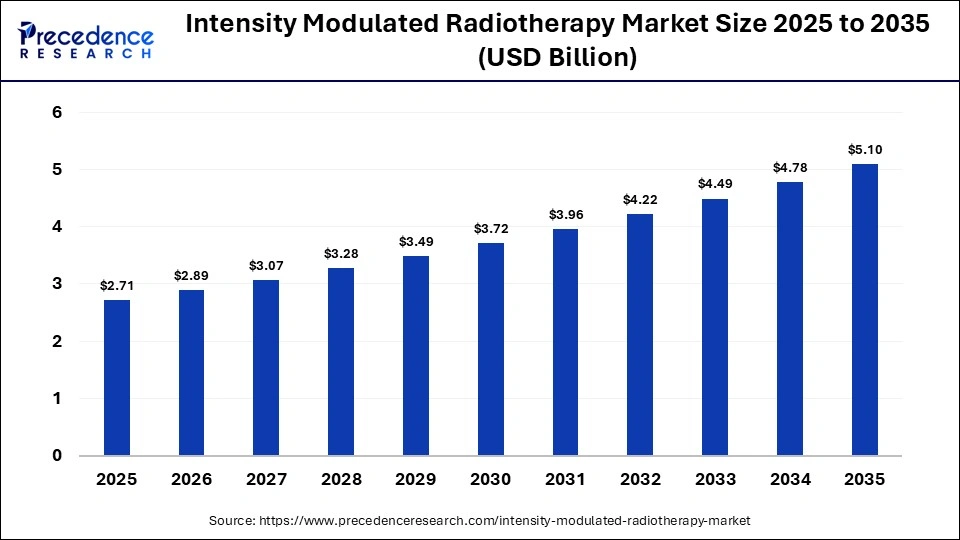
The global intensity modulated radiotherapy (IMRT) market is witnessing steady growth, driven by the rising burden of cancer and increasing demand for precision-based treatment solutions. The market size was valued at USD 2.71 billion in 2025 and is projected to grow from USD 2.89 billion in 2026 to approximately USD 5.10 billion by 2035, expanding at a CAGR of 6.52% during the forecast period.
IMRT is an advanced external beam radiation therapy that uses computer-controlled linear accelerators to deliver precise radiation doses to tumors while minimizing exposure to surrounding healthy tissues. This high level of accuracy has made IMRT a preferred choice in modern oncology treatments.
Read Also: Soft Tissue Allograft Market
Key Takeaways
- North America dominated the global market in 2025 with a 36.70% share
- Asia Pacific is expected to grow at the fastest CAGR through 2035
- Volumetric modulated arc therapy (VMAT) led the market by delivery technique
- Linear accelerator systems accounted for the largest system component share
- Prostate cancer segment held the highest revenue share among cancer types
- Hospitals dominated the market by end-user with 62.80% share
Market Drivers
Rising Cancer Prevalence
The increasing global incidence of cancer is a major driver of IMRT adoption. As more patients require radiation therapy, the demand for precise and effective treatment modalities continues to rise.
Demand for Precision Treatment
IMRT enables highly targeted radiation delivery, reducing damage to healthy tissues and minimizing side effects. This makes it especially valuable for treating tumors located near critical organs.
Technological Advancements
Continuous innovation in radiotherapy technologies, including imaging integration and advanced treatment planning software, is improving clinical outcomes and accelerating market growth.
Role of Artificial Intelligence in IMRT
Artificial intelligence is significantly transforming the IMRT landscape by enhancing treatment accuracy and operational efficiency.
AI-driven tools assist clinicians in:
- Automated tumor contouring
- Identifying organs at risk
- Optimizing radiation dose distribution
- Enabling adaptive radiotherapy
These capabilities reduce treatment planning time while improving precision. AI also supports predictive analytics, helping clinicians anticipate patient responses and potential side effects.
Key Market Trends
AI-Driven Treatment Planning
AI-powered software is streamlining IMRT workflows by automating complex planning processes and enabling personalized therapy.
Real-Time Tumor Monitoring
Integration of imaging technologies allows clinicians to monitor tumors during treatment, ensuring precise dose delivery.
Advancements in Linear Accelerators
Modern systems offer faster beam delivery, improved collimation, and enhanced automation, improving efficiency and patient outcomes.
Patient-Centric Therapy
Healthcare providers are increasingly focusing on individualized treatment approaches, which IMRT supports effectively.
Segment Insights
By IMRT Delivery Technique
Volumetric Modulated Arc Therapy (VMAT) dominated the market due to its ability to deliver radiation quickly and accurately through continuous machine rotation.
Step-and-Shoot IMRT is expected to grow steadily, particularly in emerging markets, due to its cost-effectiveness and compatibility with existing infrastructure.
By System Component
Linear accelerator systems held the largest share, as they are essential for delivering high-energy radiation beams with precision.
Imaging and image guidance systems are projected to grow at the fastest rate, driven by demand for real-time tumor tracking and improved treatment accuracy.
By Cancer Site
Prostate cancer dominated the market due to its high global prevalence and the need for precision treatment.
Brain and CNS tumors are expected to grow at the fastest CAGR due to the complexity of treatment and the need to minimize neurological damage.
By End User
Hospitals led the market owing to advanced infrastructure, skilled professionals, and high patient volumes.
Specialty cancer centers are expected to witness rapid growth as they adopt advanced radiotherapy technologies and focus on specialized care.
By Service Model
New system installations dominated the market as healthcare providers invest in advanced radiotherapy equipment.
Upgrade and replacement services are growing due to cost-effective modernization of existing systems.
Regional Insights
North America
North America remains the leading region due to:
- Advanced healthcare infrastructure
- High adoption of innovative technologies
- Strong presence of key market players
- Rising cancer incidence
The region continues to invest heavily in oncology research and advanced radiotherapy systems.
Asia Pacific
Asia Pacific is expected to grow at the fastest rate due to:
- Increasing cancer cases
- Expanding healthcare infrastructure
- Rising awareness of advanced treatment options
- Growth in specialized oncology centers
Countries such as China, India, Japan, and South Korea are driving regional demand.
Europe
Europe is witnessing steady growth driven by:
- Technological advancements
- Strong regulatory support
- Increasing adoption of precision medicine
Competitive Landscape
Key players in the IMRT market include:
- Varian Medical Systems
- Elekta
- Accuray
- Siemens Healthineers
- GE HealthCare
- Canon Medical Systems
- Brainlab
- RaySearch Laboratories
These companies are focusing on innovation, AI integration, and strategic partnerships to strengthen their market position.
Recent Developments
- 2025: Siemens Healthineers’ Varian introduced upgrades to its Halcyon platform, improving imaging and treatment efficiency
- 2024: Accuray partnered with Indian cancer centers to expand IMRT-enabled systems in the region
Future Outlook
The IMRT market is expected to witness sustained growth over the next decade, driven by advancements in AI, increasing cancer burden, and growing demand for precision oncology.
Emerging trends such as adaptive radiotherapy, real-time imaging integration, and AI-powered treatment planning will further enhance clinical outcomes and expand market opportunities.
Get Sample Copy: https://www.precedenceresearch.com/sample/8121
For inquiries regarding discounts, bulk purchases, or customization requests, please contact us at sales@precedenceresearch.com
