
 by
by Human Centric Lighting Market Size in 2026
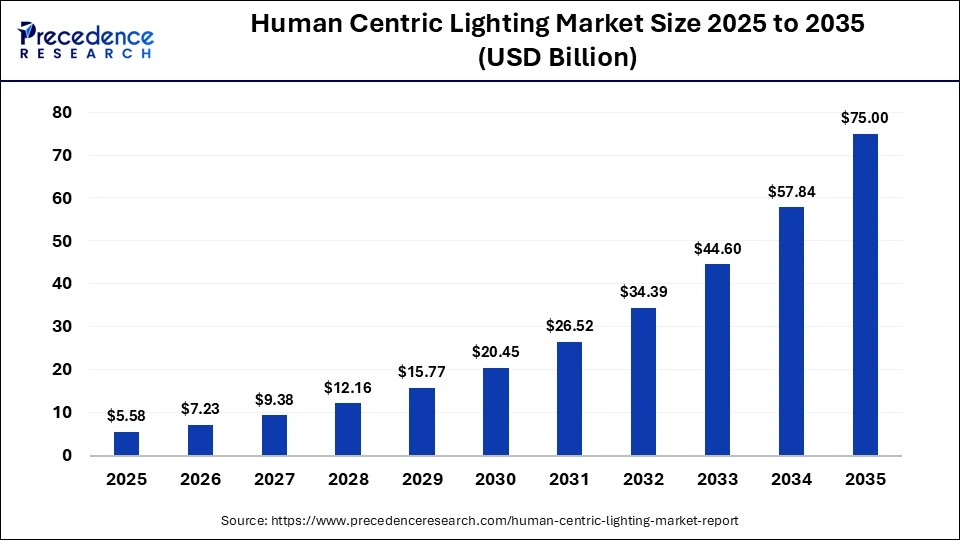
The global human centric lighting (HCL) market is expected to reach USD 7.23 billion in 2026, growing from USD 5.58 billion in 2025. With rapid adoption of smart lighting and wellness-focused infrastructure, the market is projected to surge to USD 75.00 billion by 2035, expanding at a remarkable CAGR of 29.68% from 2026 to 2035.
Read Also: Machine Automation Controller Market
Expanded Market Overview
Human Centric Lighting (HCL) represents a next-generation lighting approach that goes beyond simple illumination. It is designed to mimic natural daylight cycles and align with the human circadian rhythm, positively influencing:
- Sleep patterns
- Mood and mental health
- Productivity and alertness
- Overall well-being
Unlike traditional lighting systems, HCL dynamically adjusts color temperature and intensity throughout the day—cool, bright light for focus during the day and warm, soft light for relaxation in the evening.
This technology is increasingly integrated into smart buildings, homes, hospitals, offices, and educational institutions, making it a critical component of future infrastructure.
Key Market Highlights
- 2026 Market Size: USD 7.23 Billion
- 2035 Forecast: USD 75.00 Billion
- CAGR (2026–2035): 29.68%
- Leading Region: Europe (39% share in 2025)
- Fastest Growing Region: Asia-Pacific
- Top Product Segment: Fixtures (36% share)
- Leading Application: Commercial (60% share)
Key Growth Drivers
1. Increasing Focus on Employee Well-being
Organizations are investing in HCL systems to:
- Improve employee productivity
- Reduce fatigue and stress
- Enhance workplace satisfaction
HCL systems replicate natural daylight cycles, helping employees stay alert during working hours and reducing burnout.
2. Rapid Urbanization and Smart Infrastructure
Global urbanization is driving demand for:
- Smart buildings
- Sustainable infrastructure
- Energy-efficient lighting systems
Governments and enterprises are increasingly integrating HCL into modern construction projects.
3. Rising Demand for Energy Efficiency
HCL systems, especially those using LED and IoT technologies, help:
- Reduce electricity consumption
- Optimize lighting based on occupancy and daylight
- Lower operational costs
Impact of Artificial Intelligence (AI)
Artificial Intelligence is playing a transformative role in HCL adoption by enabling intelligent and adaptive lighting systems.
Key AI Capabilities:
- Real-time adjustment of brightness and color temperature
- Occupancy detection and environmental sensing
- Personalized lighting experiences
- Predictive energy optimization
For example:
- Offices use AI to enhance alertness during peak hours
- Homes adjust lighting based on daily routines
- Hospitals optimize lighting for patient recovery and comfort
AI-driven HCL systems significantly improve user experience, efficiency, and sustainability.
Emerging Market Trends
Adoption Across Multiple Sectors
HCL is gaining traction in:
- Healthcare (patient recovery & comfort)
- Education (better concentration)
- Offices (employee productivity)
- Manufacturing (worker safety and efficiency)
Growth of Smart Homes
Increasing adoption of smart home ecosystems is boosting demand for:
- Tunable lighting
- App-controlled lighting systems
- Voice-enabled lighting automation
Regulatory Push for Wellness Lighting
Governments and organizations are introducing workplace wellness standards, encouraging adoption of biologically optimized lighting systems.
Segment Insights
By Product
- Fixtures (Dominant Segment):
Accounted for the largest share due to their role as the primary delivery system for dynamic lighting. - Services (Fastest Growing):
Driven by increasing demand for:- System integration
- Maintenance
- Lighting design and consulting
By Installation Type
- New Installation (68% Share):
Dominates due to integration in new construction projects. - Retrofit (Fastest Growth):
Existing buildings are upgrading to HCL systems without full reconstruction.
By Application
- Commercial (Leading Segment):
Offices, retail, and hospitality sectors prioritize productivity and customer experience. - Residential (Fastest Growth):
Increasing consumer awareness of:- Sleep health
- Mood enhancement
- Smart home integration
Regional Insights
Europe (Market Leader)
Europe leads the global HCL market due to:
- Strict energy efficiency regulations
- Strong focus on employee well-being
- High adoption of smart building technologies
Countries like Germany are at the forefront, driven by innovation and sustainability initiatives.
Asia-Pacific (Fastest Growing)
Asia-Pacific is witnessing rapid growth due to:
- Urbanization and infrastructure expansion
- Rising adoption of smart homes
- Government support for sustainable construction
China and India are key growth engines with expanding commercial and residential sectors.
Competitive Landscape
Leading companies in the human centric lighting market include:
- Signify Holding
- Acuity Brands, Inc.
- Schneider Electric
- Legrand SA
- Lutron Electronics Co., Inc.
- Trilux Group
- Zumtobel Group
- Wipro Lighting
- Helvar
- LEDVANCE GmbH
These companies are focusing on AI integration, IoT-enabled lighting, and smart building solutions to strengthen their market position.
Recent Developments
- Hyundai Mobis (2024): Introduced AI-driven in-car lighting that adapts to driver mood and conditions
- SUNROOOF (2025): Launched an e-commerce platform for human-centric lighting solutions in India and UAE
- Growing investments in personalized lighting and smart infrastructure
Conclusion
The human centric lighting market is undergoing explosive growth, driven by the convergence of health awareness, smart technology, and sustainability goals. As organizations and individuals increasingly recognize the impact of lighting on well-being, HCL is transitioning from a luxury to a necessity.
With strong support from AI, IoT, and LED innovations, the market is set to redefine how lighting interacts with human biology—making it a cornerstone of future smart environments.
Get Sample Copy: https://www.precedenceresearch.com/sample/8227
For inquiries regarding discounts, bulk purchases, or customization requests, please contact us at sales@precedenceresearch.com
