
 by
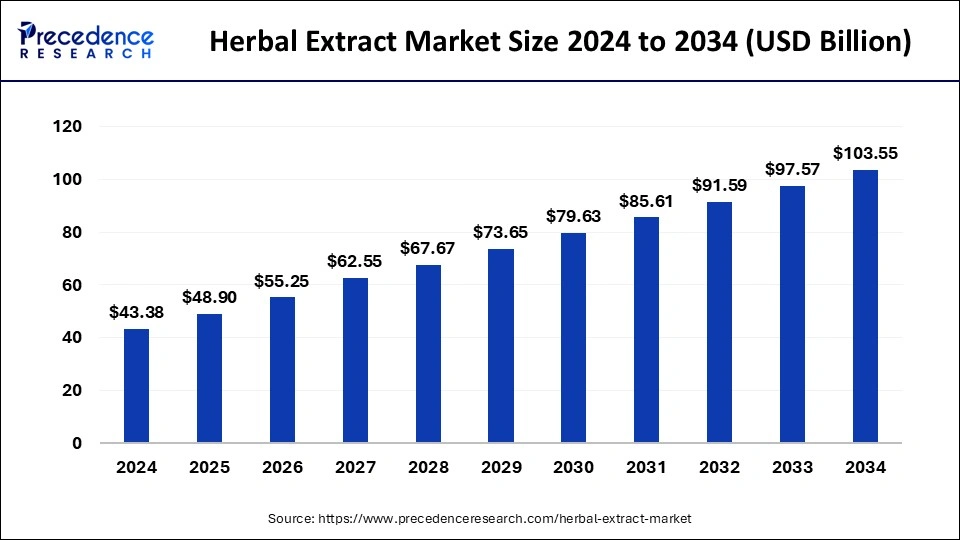
by The global herbal extract market is on a rapid growth trajectory, with an estimated market size of USD 43.38 billion in 2024. By 2025, the market is predicted to expand to USD 48.90 billion, and by 2034, it is expected to reach approximately USD 103.55 billion—growing at a solid CAGR of 8.69% from 2025 to 2034.
Key Takeaways
-
Asia Pacific dominated the market in 2024, accounting for more than 53% of the total revenue.
-
Fruits, flowers, and bulbs were the largest segment by source, representing 45.85% of the market share in 2024.
-
The phytomedicines segment, accounting for 35.97% of the market share in 2024, is a key driver of growth.
-
The pharmaceutical & dietary supplements segment was the largest application category in 2024, holding 37% of the market share.
Market Overview
The herbal extract market involves the extraction, processing, and commercialization of bioactive compounds obtained from plants. These extracts contain beneficial compounds, such as phytochemicals, flavonoids, alkaloids, and essential oils, which have applications across various industries, including
-
Pharmaceuticals
-
Cosmetics
-
Food & Beverages
-
Dietary Supplements
-
Aromatherapy
Read Also: U.S. Absence Management Market
Key Drivers of Herbal Extract Market Growth
1. Growing Demand for Natural Products
The rising consumer preference for natural, plant-based products is one of the key factors driving the market’s growth. As people become more health-conscious, they are shifting from synthetic ingredients to herbal remedies and plant-based alternatives.
2. Advancements in Research and Development
Ongoing research and development in the herbal extract industry is leading to innovations in extraction techniques, formulation methods, and the development of new products. This has resulted in higher-quality herbal extracts and enhanced product efficacy.
3. Favorable Regulatory Environment
Countries with established regulatory frameworks for herbal medicine, such as China and India, provide a supportive environment for the growth of the herbal extract market. These regulations ensure that products are safe, effective, and of high quality, further boosting market confidence.
Growth Factors Driving the Herbal Extract Market
The herbal extract market is expanding rapidly, fueled by various key factors that are shaping its growth trajectory. These factors range from changing consumer preferences to advancements in technology, making herbal extracts more accessible and effective. Below are the primary growth drivers:
1. Growing Demand for Natural and Plant-Based Products
A major factor contributing to the growth of the herbal extract market is the increasing consumer demand for natural and plant-based products. As people become more health-conscious, they are shifting from synthetic ingredients to natural alternatives in personal care, food, beverages, and health supplements. This shift is driven by the growing awareness of the health risks associated with synthetic chemicals and additives, prompting consumers to seek safer and more eco-friendly options.
-
Herbal medicine, which has been used for centuries in many cultures, is now becoming more mainstream as a viable alternative to pharmaceutical drugs.
-
The trend towards clean-label products—those without artificial preservatives or additives—also aligns with the use of herbal extracts, which are perceived as safe, natural ingredients.
2. Rising Popularity of Preventive Healthcare and Wellness
As the global population becomes more focused on preventive healthcare and wellness, herbal extracts are gaining popularity. Consumers are increasingly looking for natural ways to improve their overall health, reduce stress, manage chronic diseases, and boost their immune systems.
-
Phytochemicals and antioxidants found in herbal extracts are believed to have several health benefits, such as reducing inflammation, improving digestion, supporting the immune system, and managing stress levels.
-
As more people shift towards holistic health practices, the demand for natural remedies and functional foods, including those containing herbal extracts, is expected to grow.
3. Increased Scientific Research and Product Innovation
Advances in scientific research and product innovation are playing a significant role in the expansion of the herbal extract market. Ongoing studies on the medicinal properties of various plants and herbs are leading to new applications and formulations, enhancing the efficacy of herbal extracts.
-
Research is uncovering new benefits of lesser-known herbs, helping manufacturers develop new products.
-
Improvements in extraction techniques, such as supercritical fluid extraction and cold-pressing, have led to higher yields, better quality, and greater bioavailability of active compounds in herbal extracts.
4. Favorable Regulatory Environment
The growth of the herbal extract market is also being supported by favorable regulatory frameworks in many countries. Governments are increasingly providing guidelines and certifications for herbal products to ensure their safety and quality. These regulations help build consumer confidence in the safety and efficacy of herbal extracts.
-
Countries like China and India, with a long tradition of herbal medicine, have established systems to regulate traditional herbal remedies, making it easier for manufacturers to enter the market.
-
The World Health Organization (WHO) and other global health agencies are also playing a role in ensuring that herbal medicines meet safety standards, which helps to expand their global acceptance.
5. Expansion of the Nutraceutical and Functional Food Sectors
As consumers become more interested in functional foods and nutraceuticals, the demand for herbal extracts in these sectors is rapidly increasing. Herbal extracts are increasingly being used to enhance the nutritional value of foods and beverages, offering functional benefits such as stress relief, better sleep, and improved digestive health.
-
Herbal supplements are being used to target specific health concerns, from boosting immunity to improving cognitive function.
-
The global functional food market is growing, and herbal extracts are an essential component of this trend, as consumers seek products that offer more than just basic nutrition.
Market Opportunities: Rising Investment in R&D
Investment in research and development is opening up new opportunities for the herbal extract market. Companies are exploring new herbal sources and innovative extraction methods to create products with improved bioavailability and targeted therapeutic applications. This investment is particularly promising for expanding the use of herbal extracts in pharmaceuticals and nutraceuticals.
Challenges Facing the Herbal Extract Market
One significant challenge for the herbal extract market is the slower effectiveness of herbal remedies compared to conventional drugs. While herbal extracts are valued for their long-term health benefits, their slower onset of action may deter consumers who seek fast relief from ailments. However, continued consumer education and scientific validation of herbal extracts’ benefits can help overcome this challenge.
Recent Developments in the Herbal Extract Market
-
November 2024: Purple Life Sciences introduced PSOCARE, an oil for psoriasis treatment. This new product highlights the growing interest in natural remedies for skin conditions.
-
September 2024: Givaudan Active Beauty launched a collection of botanical extracts aimed at revolutionizing makeup with enhanced performance and skin benefits.
-
March 2025: Health Canada approved Shoden, an ashwagandha extract, as a Natural Health Product, reinforcing the herb’s credibility in the wellness market.
Key Market Segments (2024)
-
By Source: Fruits, flowers, and bulbs dominate the market, followed by leaves, barks & stems, and rhizomes & roots.
-
By Type: The essential oils segment holds the largest share, followed by flavors & fragrances, spices, and phytomedicines.
-
By Application: Pharmaceuticals & dietary supplements hold the largest share, with food & beverage and personal care & cosmetics following closely behind.
For inquiries regarding discounts, bulk purchases, or customization requests, please contact us at sales@precedenceresearch.com
