
 by
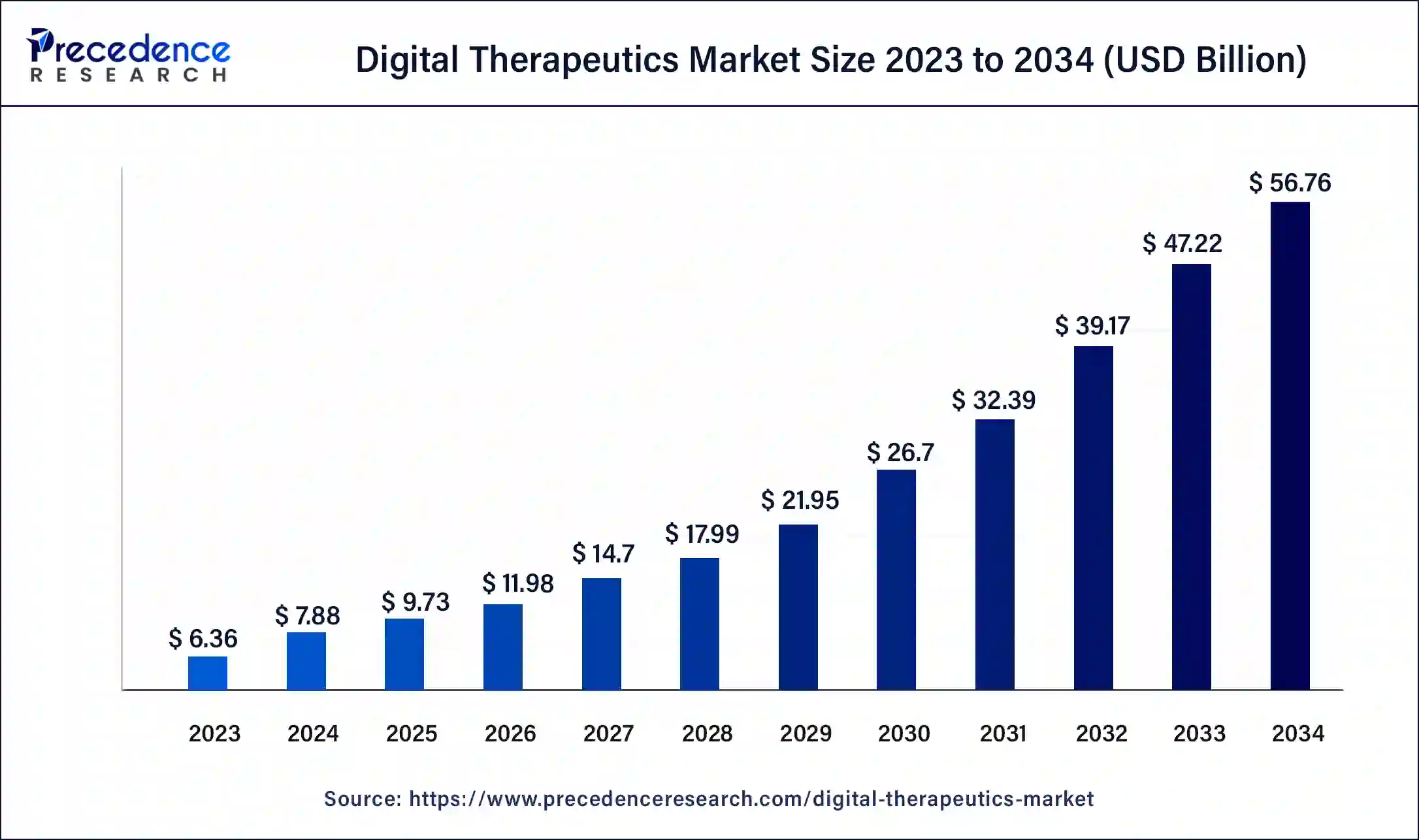
by The global digital therapeutics market was estimated at USD 7.88 billion in 2024 and is predicted to rise from USD 9.73 billion in 2025 to approximately USD 56.76 billion by 2034, expanding at a CAGR of 21.65% from 2025 to 2034. The market growth is driven by the rising prevalence of chronic diseases, the growing geriatric population, increasing adoption of smartphones and digital health solutions, and advancements in AI-based therapies.
Read Also: Data Center GPU Market
Digital Therapeutics Market Key Takeaways
-
Market Size: USD 7.88 billion in 2024; projected to reach USD 56.76 billion by 2034.
-
Growth Rate: CAGR of 21.65% from 2025 to 2034.
-
Leading Region: North America with 43.91% share in 2024.
-
Fastest Growing Region: Asia Pacific due to a large consumer base and rising geriatric population.
-
Top Product Type: Prescription digital therapeutics (PDTs) – 29.40% market share in 2024.
-
Fastest Growing Product Type: Behavioral & cognitive interventions via digital platforms – CAGR of 10.20% in 2024.
-
Leading Therapy Area: Central nervous system (CNS)/neuroscience – 32.60% market share in 2024.
-
Fastest Growing Therapy Area: Metabolic and endocrine – CAGR of 10.80% in 2024.
-
Top Delivery Platform: Mobile applications (iOS, Android) – 40.70% market share in 2024.
-
Fastest Growing Delivery Platform: AI-based chatbots or coaching interfaces – CAGR of 11.10% in 2024.
-
Leading Business Model: B2B2C – 35.80% market share in 2024.
-
Fastest Growing Business Model: Reimbursement-based – CAGR of 10.40% in 2024.
-
Top End-User: Patients – 47.30% market share in 2024.
-
Fastest Growing End-User: Payers – CAGR of 9.60% in 2024.
Market Overview
Digital therapeutics (DTx) are evidence-based interventions delivered via software to prevent, manage, or treat medical conditions. They are designed to complement or replace traditional therapies, offering personalized healthcare solutions and reducing reliance on hospital visits and costly medications. DTx applications are increasingly used to address chronic diseases such as diabetes, obesity, hypertension, mental health disorders, and neurological conditions.
The integration of AI, wearable devices, and mobile platforms enhances the personalization and effectiveness of digital therapeutics, while regulatory advancements and reimbursement models are paving the way for wider adoption. Additionally, the global shift toward value-based care models emphasizes patient outcomes and cost efficiency, further boosting market demand.
Regional Insights
-
North America: Dominated the market in 2024, driven by technological innovation, healthcare reforms, and the presence of leading DTx solution providers. The U.S. digital therapeutics market alone was USD 3.02 billion in 2024, projected to reach USD 20.98 billion by 2034 at a CAGR of 21.38%.
-
Asia Pacific: Expected to witness the fastest growth due to early adoption of innovative technologies, rising geriatric population, increasing government investments, and growing digital healthcare awareness.
-
Europe, Latin America, and MEA: Moderate growth anticipated due to increasing investments in digital healthcare solutions and expanding access to mobile health platforms.
Segment Insights
By Product Type
-
Prescription Digital Therapeutics (PDTs): Largest share in 2024, driven by rising chronic disease incidence.
-
Behavioral & Cognitive Interventions via Digital Platforms: Fastest growing segment with a CAGR of 10.20%, fueled by widespread smartphone adoption.
By Therapy Area
-
CNS/Neuroscience: Largest segment with 32.60% market share, addressing mental and neurological health disorders.
-
Metabolic and Endocrine Disorders: Fastest growing segment (CAGR 10.80%) due to rising diabetes, obesity, and metabolic syndrome prevalence.
By Delivery Platform
-
Mobile Applications: Leading segment at 40.70% share.
-
AI-based Chatbots / Coaching Interfaces: Fastest growing platform with CAGR of 11.10%, providing cost-effective, personalized care.
By Business Model
-
B2B2C: Dominant model (35.80%) as healthcare providers and employers adopt DTx for chronic disease management.
-
Reimbursement-based: Fastest growing (CAGR 10.40%), supported by evolving insurance policies and value-based care models.
By End User
-
Patients: Largest segment (47.30%) due to chronic disease prevalence and growing geriatric population.
-
Payers: Fastest growing segment (CAGR 9.60%), actively promoting DTx to reduce healthcare costs.
Market Dynamics
Drivers:
-
Growing geriatric population globally increases susceptibility to chronic diseases.
-
Rising prevalence of chronic diseases such as diabetes, obesity, and cardiovascular disorders.
-
Increasing smartphone penetration and adoption of digital health platforms.
Restraints:
-
Data privacy concerns and lack of proper regulation in several countries.
-
Limited monetization strategies for DTx application developers.
Opportunities:
-
Incorporation of AI, machine learning, and wearable devices enhances therapy personalization.
-
Expansion into emerging markets with large patient populations and increasing healthcare digitization.
Challenges:
-
Lack of consumer awareness and trust in digital therapeutics.
-
Behavioral change required from patients for effective adoption of DTx solutions.
Recent Developments
-
April 2025: Click Therapeutics launched an updated brand identity following FDA clearance for a major depressive disorder DTx.
-
May 2025: Eyesight Electronics developed a home-based therapy, AmblyoFix, enabling patients with amblyopia to regain over 50% vision in three months.
-
May 2025: BioGene Therapeutics launched its new website, focusing on metabolic health and gene-based therapies.
-
November 2024: Hanmi Pharmaceutical introduced efpeglenatide, an anti-obesity drug candidate completing Phase 3 trials.
-
September 2023: Fitbit introduced the Fitbit Charge 6 to track heart rate during workouts.
Key Companies
-
Fitbit Health Solutions
-
2MORROW, Inc.
-
Medtronic Plc.
-
Livongo Health, Inc.
-
Pear Therapeutics, Inc.
-
Omada Health, Inc.
-
Resmed, Inc. (Propeller Health)
-
Proteus Digital Health, Inc.
-
Welldoc, Inc.
-
Voluntis, Inc.
-
Canary Health Inc.
-
Noom, Inc.
-
Mango Health Inc.
-
Dthera Sciences
For inquiries regarding discounts, bulk purchases, or customization requests, please contact us at sales@precedenceresearch.com
