
 by
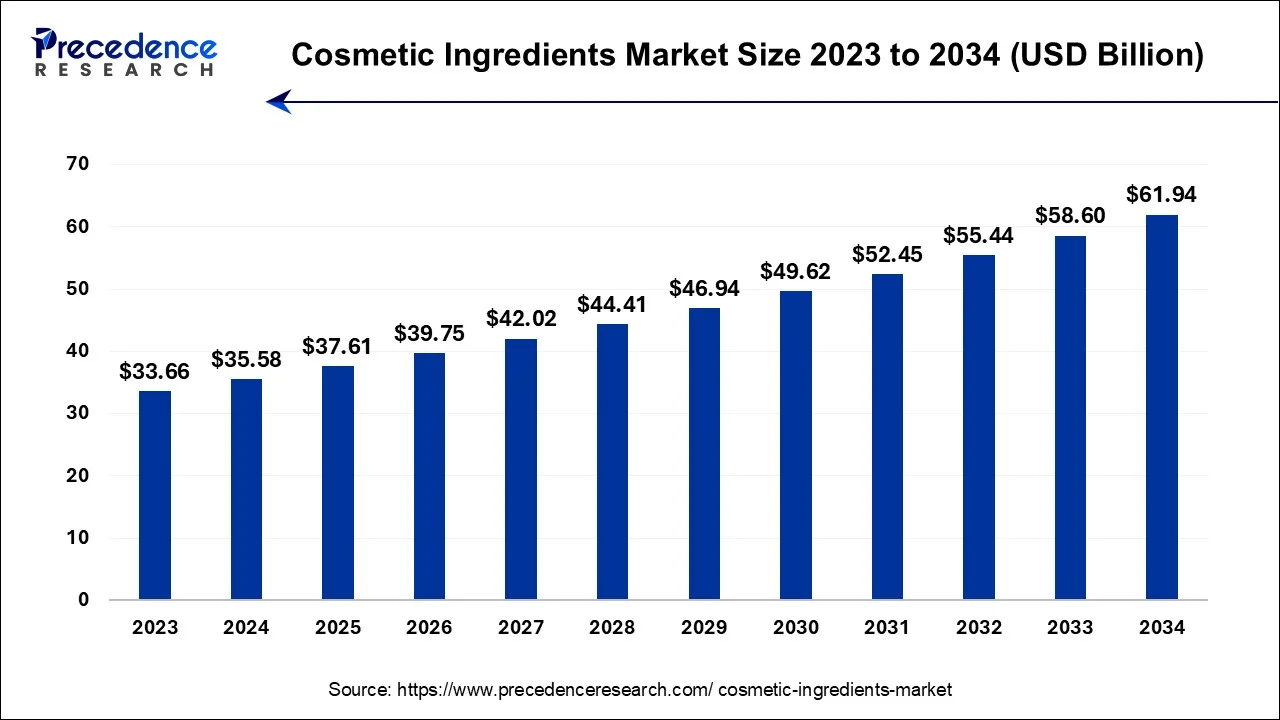
by The global cosmetic ingredients market is experiencing significant growth due to increasing demand for eco-friendly, vegan, and clean-label products, alongside advancements in biotechnology. This market is poised to expand at a CAGR of 5.7% from 2025 to 2034, reaching an estimated value of USD 61.94 billion by 2034, up from USD 35.58 billion in 2024.
Key Market Highlights
-
Market Size & Growth Rate:
-
2024 Market Size: USD 35.58 billion
-
Projected 2034 Market Size: USD 61.94 billion
-
CAGR (2025–2034): 5.7%
-
-
Regional Insights:
-
Asia Pacific led the market in 2024, contributing significantly to the global share. The region is projected to reach USD 26.32 billion by 2034, growing at a CAGR of 5.83%.
-
North America is expected to have the fastest-growing market during the forecast period, driven by increased demand for anti-aging and beauty products, along with the rise of e-commerce.
-
-
Ingredient Type:
-
Natural Ingredients dominated in 2024, driven by the growing preference for clean beauty and natural formulations.
-
Synthetic Ingredients are expected to grow fastest due to their cost-effectiveness, stability, and the ability to provide longer-lasting formulations.
-
-
Product Type:
-
Surfactants held the largest share in 2024 due to their use in shampoos, body washes, and facial cleansers.
-
The Botanical Extract segment is anticipated to grow the fastest, reflecting the trend toward organic, natural products in the cosmetic sector.
-
-
Functionality Insights:
-
Cleaning Agents & Foamers led the market in 2024, owing to rising consumer interest in multi-functional products.
-
The Moisturizing segment is expected to grow rapidly, with increasing demand for anti-aging and hydrating ingredients, particularly in drier climate regions.
-
-
End-User Insights:
-
Skin Care was the dominant segment in 2024.
-
Oral Care is projected to grow at the fastest rate due to rising awareness of oral health and the increasing adoption of products with natural ingredients like activated charcoal and probiotics.
-
View Sample: https://www.precedenceresearch.com/sample/2366
Market Overview
The cosmetic ingredients market is crucial for the formulation and production of various cosmetic products such as skin care, hair care, oral care, and body care. These ingredients serve various functions in the development of products like moisturizers, shampoos, sunscreens, and lipsticks. They include substances like water, emulsifiers, preservatives, thickeners, pigments, and perfumes, all of which play key roles in improving the texture, performance, and appearance of cosmetic products.
Cosmetic Ingredients Types
-
Natural Ingredients: Derived from plants, minerals, and other organic sources, these ingredients cater to the rising demand for eco-friendly and sustainable cosmetics. They are commonly used for their anti-inflammatory, antioxidant, and moisturizing properties.
-
Synthetic Ingredients: Created through chemical processes, these ingredients are known for their stability, cost-effectiveness, and ability to provide long-lasting formulations. Examples include synthetic preservatives, emulsifiers, and thickeners. The increasing use of biotechnology is also leading to new synthetic ingredients like peptides and polymers.
Key Functions of Cosmetic Ingredients
-
Cleansing: Surfactants and foamers are used in cleansing products such as body washes, face washes, and shampoos to remove dirt, oil, and impurities.
-
Moisturizing: Ingredients like hyaluronic acid, glycerin, and ceramides help hydrate the skin and prevent moisture loss, which is particularly important in anti-aging products.
-
Preserving: Preservatives are used to prevent the growth of microorganisms and increase the shelf life of cosmetic products.
-
Emulsifying: Emulsifiers help blend water-based and oil-based ingredients, ensuring that products have a smooth, consistent texture (important in creams, lotions, and sunscreens).
-
Coloring: Pigments and colorants are used to provide cosmetic products with appealing colors, from lipsticks to foundations.
Market Trends and Drivers
-
Clean Beauty and Sustainability: Consumer demand for clean, natural, and vegan cosmetic products has been a key driver of growth in the cosmetic ingredients market. As a result, companies are increasingly formulating products free from harmful chemicals such as sulfates, parabens, and phthalates.
-
Biotechnology Innovations: Advances in biotechnology are allowing manufacturers to create more effective and sustainable cosmetic ingredients. This includes the development of bio-based emollients, polymers, and preservatives, which offer eco-friendly alternatives to synthetic options.
-
Consumer Preferences for Personalization: Increasing consumer interest in personalized beauty is pushing companies to develop products that cater to individual needs, such as sensitive skin, anti-aging, or specific hair care concerns. This is leading to greater demand for active ingredients that can deliver targeted results.
-
Growing Demand for Anti-Aging and Skin Care Products: The increasing focus on skincare routines, especially anti-aging treatments, is driving the demand for moisturizing, anti-wrinkle, and skin-smoothing ingredients like retinoids, peptides, and vitamin C.
-
Regulatory Support for Organic Ingredients: Governments and regulatory bodies, such as the European Union’s Cosmetic Directive and the US FDA, have been establishing standards and certifications that promote the use of safe, natural, and organic ingredients in cosmetics, encouraging manufacturers to adopt cleaner formulations.
Challenges
-
Regulatory Constraints: The stringent regulations on the use of certain synthetic chemicals in cosmetics (due to safety concerns) can limit the types of ingredients used in formulations. For example, certain preservatives and colorants are banned or restricted in various regions, especially in Europe.
-
Sustainability Concerns: As consumers increasingly demand eco-friendly products, manufacturers face the challenge of sourcing raw materials in a sustainable manner. This has led to an increasing focus on plant-based ingredients and ethical sourcing.
-
Harmful Effects of Certain Ingredients: While synthetic ingredients are effective and cost-efficient, they can sometimes pose skin health risks (e.g., irritation, acne, allergies). This has driven the market toward more natural alternatives, but also presents a challenge in maintaining product stability and performance.
-
Supply Chain Issues: The cosmetic industry relies heavily on both natural and synthetic ingredients, and disruptions in the supply chain (e.g., due to environmental or geopolitical factors) can impact the availability and cost of raw materials.
Growth Opportunities
-
Middle-Class Growth in Emerging Markets: The increasing number of middle-class consumers in regions like Asia Pacific, especially in China, India, and Southeast Asia, is expanding the demand for both luxury and mass-market cosmetic products.
-
E-commerce Expansion: The rise of online shopping platforms is making cosmetic products, including ingredients, more accessible to a broader audience, particularly in emerging markets.
-
Increased Awareness of Clean Beauty: The rising awareness of the harmful effects of certain chemicals has prompted consumers to prefer clean beauty products. Manufacturers are responding by investing in research to create safer, more sustainable cosmetic ingredients.
Read Also: Food Container Market
For inquiries regarding discounts, bulk purchases, or customization requests, please contact us at sales@precedenceresearch.com
