
 by
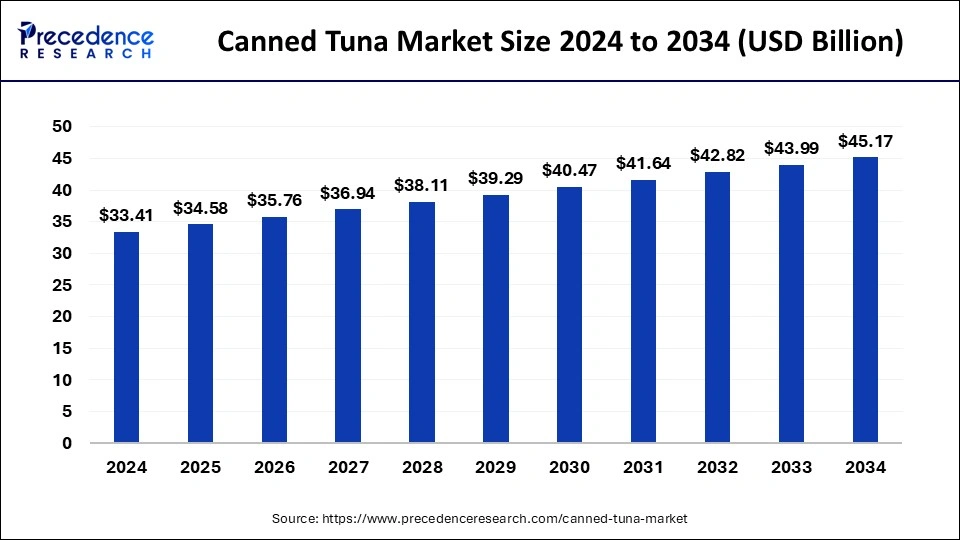
by The global canned tuna market continues to grow steadily, driven by increasing consumer demand for convenient, nutritious, and shelf-stable food options. In 2024, the global canned tuna market was valued at USD 33.41 billion, and it is projected to reach USD 45.17 billion by 2034, expanding at a CAGR of 3.00%. This article explores the key trends, growth drivers, and regional insights for the canned tuna market over the forecast period from 2025 to 2034.
Key Market Highlights
-
Market Size (2024–2034):
-
2024 Market Value: USD 33.41 billion
-
2025 Market Forecast: USD 34.58 billion
-
2034 Projected Market Value: USD 45.17 billion
-
CAGR (2025–2034): 3.00%
-
-
Key Market Drivers
-
Rising demand for ready-to-eat/ready-to-cook food products
-
Increased awareness of health benefits, including high protein and omega-3 content
-
The expansion of e-commerce channels
-
Rising consumer preference for sustainable and ethically sourced products
-
-
Key Trends
-
AI Integration: Artificial Intelligence (AI) is helping companies enhance operational efficiency, track sustainable fishing practices, and analyze consumer preferences, which is further fueling market growth.
-
Sustainability: With rising consumer concerns over environmental impact, ethical fishing and sustainable sourcing practices are becoming increasingly important, particularly in markets like Europe and North America.
-
Regional Insights
Europe: The Market Leader
Europe has maintained its position as the dominant player in the global canned tuna market, holding a market share of 41.65% in 2024. The European market is forecasted to reach USD 18.60 billion by 2034, growing at a CAGR of 2.90%. Health-conscious consumers in Europe often choose canned tuna for its high protein and omega-3 fatty acid content. The demand for sustainably sourced products is also on the rise, with consumers increasingly favoring brands that support ethical fishing practices.
Sustainability certifications, such as the Marine Stewardship Council (MSC), play a crucial role in consumer purchasing decisions. The European canned tuna market is highly competitive, with many brands emphasizing eco-friendly packaging and responsible sourcing.
North America: Fast-Growing Market
North America’s canned tuna market is experiencing significant growth, particularly in the U.S. The increasing consumer shift towards high-protein, low-fat foods, combined with a strong retail network, has contributed to the market’s expansion. With the rise of online grocery shopping and the increasing demand for convenient, ready-to-eat food options, the market for canned tuna is expected to continue to grow at a healthy pace.
In 2025, Chicken of the Sea introduced a Wild Caught Light Tuna Packet with Ghost Pepper, targeting spice lovers. The growing trend for convenient, flavorful, and nutritious meals positions the canned tuna market for strong growth in North America.
Middle East & Africa: The Fastest-Growing Region
The Middle East & Africa region is expected to witness the fastest growth in the canned tuna market during the forecast period. The increasing popularity of convenient and healthy food products, along with the growing interest in international cuisines, is expected to drive the demand for canned tuna in this region.
Market Segmentation
By Tuna Species
-
Skipjack Tuna: The skipjack segment captured the largest revenue share (61.65%) in 2024. Skipjack is widely used in canned tuna products, particularly because of its affordable price and mild flavor. Sustainable skipjack tuna sourced with certifications such as MSC is increasingly sought after.
-
Yellowfin Tuna: Yellowfin is expected to experience the fastest growth in the coming years. Known for its delicate flavor and firm texture, yellowfin is often used in higher-end canned tuna products. It is especially popular among health-conscious consumers due to its nutritional benefits.
By Type
-
Ready-to-Cook: This segment is expected to grow at a significant CAGR, driven by the increasing demand for time-efficient and convenient meal solutions. With busy modern lifestyles, many consumers prefer ready-to-cook products that require minimal preparation.
-
Ready-to-Eat: Canned tuna remains a popular choice for consumers seeking quick and easy meal solutions, especially as an ingredient for sandwiches, salads, and international cuisines.
Factors Driving Market Growth
1. Convenience & Ready-to-Eat Meals
The demand for ready-to-eat and ready-to-cook food products is rising, particularly in urban areas. Consumers, especially busy professionals and working women, are increasingly looking for nutritious, quick-to-prepare meals. Canned tuna offers a protein-rich and shelf-stable option, making it an ideal choice.
2. E-Commerce Growth
The expansion of e-commerce platforms has made canned tuna more accessible to consumers, especially in regions like North America and Europe. Online shopping provides convenience, detailed product information, and home delivery options, fueling market growth.
3. Health & Wellness Trends
With growing awareness about health and wellness, more consumers are looking for high-protein, omega-3-rich foods. Canned tuna fits the bill as it is a healthy, convenient option for busy individuals who still want to maintain a balanced diet.
Challenges and Restraints
Despite the overall market growth, the canned tuna industry faces several challenges:
-
Environmental Concerns: Overfishing and unsustainable fishing practices have raised concerns among consumers and regulators. The industry is under pressure to adopt more responsible sourcing and sustainable practices.
-
Regulatory Scrutiny: Governments around the world are increasing scrutiny over tuna fishing methods and sustainability, which may affect the supply chain.
Opportunities in the Canned Tuna Market
The increasing incorporation of high-nutrient foods into everyday diets presents a significant opportunity for the canned tuna market. With the growing focus on health and sustainable sourcing, canned tuna’s position as a functional food with numerous health benefits is set to drive further demand.
Additionally, advancements in packaging technology, including eco-friendly materials and innovative portion-controlled packaging, will increase the appeal of canned tuna among modern consumers.
Recent Developments
-
BlueNalu (April 2025): A U.S.-based seafood company is set to begin cultivating bluefin tuna in California, with plans for global distribution.
-
SIMAK (December 2024): A subsidiary of Fisheries Development Oman launched its first consumer canned tuna products, focusing on high-quality, sustainably caught fish.
-
Wild Planet Foods (August 2024): Announced a collaboration with Simple Mills and Chosen Foods to launch a limited-edition Wild Tuna Snack Pack that emphasizes sustainability and healthy eating.
Go through it: Digestive Health Products Market
For inquiries regarding discounts, bulk purchases, or customization requests, please contact us at sales@precedenceresearch.com
