
 by
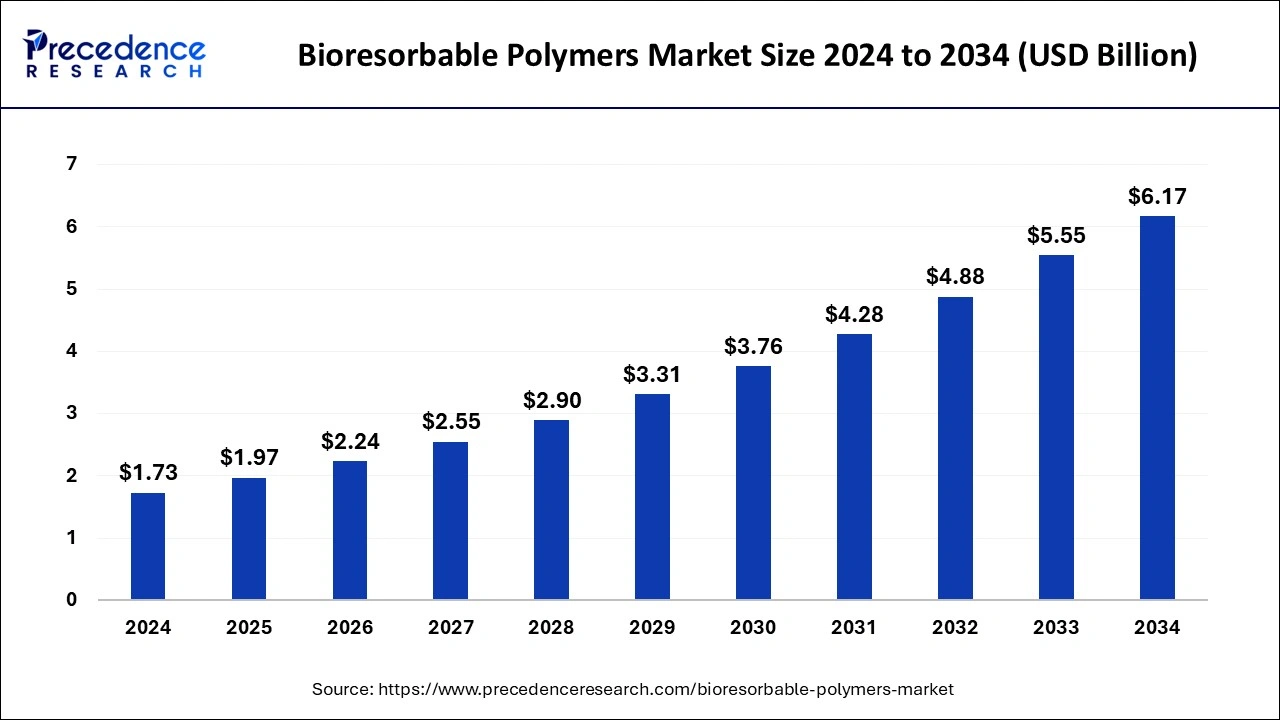
by The global bioresorbable polymers market was valued at USD 1.73 billion in 2024 and is projected to reach USD 6.17 billion by 2034, expanding at a CAGR of 13.56% from 2025 to 2034. These polymers are widely used in medical applications, such as implants and drug delivery systems, due to their biocompatibility, biodegradability, and minimal risk of immunological reactions.
Read Also: Biodegradable Mulch Film Market
Market Overview
Bioresorbable polymers are biodegradable materials that safely break down in the human body into non-toxic byproducts, eliminating the need for secondary surgeries to remove implants. They are increasingly applied in:
-
Tissue engineering
-
Orthopedic implants
-
Drug delivery systems
-
Sutures
Outside the medical sector, bioresorbable polymers are also gaining traction in eco-friendly packaging, driven by legislation and growing environmental awareness.
Market Dynamics
Drivers
-
Rising demand for advanced medical procedures and devices
-
Excellent biocompatibility, reducing risk of inflammation and rejection
-
Regulatory support, e.g., FDA approval channels for medical devices
-
Environmental awareness, driving interest in sustainable polymer alternatives
Restraints
-
Degradation rate variability, influenced by polymer type, crystallinity, shape, and processing techniques
-
High production costs and limited scalability in manufacturing
Opportunities
-
Tissue engineering & regenerative medicine, including 3D-printed scaffolds and controlled drug delivery
-
Advanced polymer R&D, enhancing mechanical strength, degradation control, and drug compatibility
Segment Insights
By Polymer Type
-
Polylactic Acid (PLA): Dominant material due to biodegradability, biocompatibility, cost-effectiveness, and mechanical strength; used in implants, screws, pins, plates, and drug delivery.
-
Poly (lactic-co-glycolic acid) (PLGA): Fastest-growing due to adjustable degradation rates and diverse applications, particularly in drug delivery and tissue engineering.
By Application
-
Medical Devices: Largest share in 2024, driven by minimally invasive procedures and chronic disease management.
-
Tissue Engineering: Fastest-growing application, propelled by regenerative medicine and 3D-printed scaffolds supporting cell proliferation and tissue regeneration.
By End User
-
Hospitals & Clinics: Largest segment due to high surgical demand and infrastructure for specialized procedures.
-
Academic & Research Institutes: Fastest-growing, focusing on polymer innovation, new formulations, and regenerative medicine research.
By Manufacturing Process
-
Extrusion: Dominant method due to versatility, cost-effectiveness, and high-volume production.
-
3D Printing/Additive Manufacturing: Fastest-growing, enabling customized geometries, precise drug delivery, and complex tissue scaffolds.
Regional Insights
-
North America: Largest market in 2024, driven by healthcare demand, R&D, and aging population.
-
Asia Pacific: Fastest-growing region, fueled by rising healthcare costs, medical tourism, and increasing adoption of advanced medical technologies.
U.S. Market: USD 430 million in 2024, projected USD 1,550 million by 2034 at a CAGR of 13.68%.
Recent Developments
-
April 2024: Sulzer introduced CAPSULTM technology for continuous manufacturing of polycaprolactone (PCL), expanding bioplastics applications.
-
November 2023: BASF launched BVERDE GP 790 L, a biodegradable anti-redeposition polymer for laundry detergents, meeting sustainability demands.
Bioresorbable Polymers Market Companies
- Corbion N.V.
- Evonik Industries AG
- Foster Corporation
- KLS Martin Group
- DSM Biomedical
- Ashland Global Holdings Inc.
Segment Covered in the Report
By Polymer Type
- Polylactic Acid (PLA)
- High L-Content PLA
- High D-Content PLA
- Polyglycolic Acid (PGA)
- Homopolymers
- Copolymers
- Polycaprolactone (PCL)
- Semi-crystalline
- Amorphous
- Poly (lactic-co-glycolic acid) (PLGA)
- Various ratios (e.g., 50:50, 75:25)
- Other Aliphatic Polyesters
- Polyhydroxybutyrate (PHB)
- Poly(1,4-dioxanone) (PDO)
- Natural Bioresorbable Polymers
- Collagen
- Chitosan
- Gelatin
- Fibrin
By Application
- Medical Devices
- Stents (e.g., coronary, peripheral)
- Orthopedic Implants (e.g., screws, pins, sutures)
- Dental Implants
- Drug Delivery Systems
- Microspheres and Nanoparticles
- Injectable Depots
- Implantable Devices
- Tissue Engineering
- Scaffolds
- Sutures
- Skin Substitutes
- Wound Management
- Dressings
- Films and Hydrogels
- Others
- Temporary support structures (e.g., spinal implants)
By End User
- Hospitals & Clinics
- General Surgery
- Orthopedic Surgery
- Cardiovascular Interventions
- Pharmaceutical & Biotechnology Companies
- Drug formulation and sustained release products
- Academic & Research Institutes
- Regenerative medicine research
- Biomedical material development
By Manufacturing Process
- Extrusion
- Injection Molding
- Solvent Casting & Particulate Leaching
- Electrospinning
By Geography
- North America
- Asia Pacific
- Europe
- Latin America
- Middle East & Africa
For inquiries regarding discounts, bulk purchases, or customization requests, please contact us at sales@precedenceresearch.com
