
 by
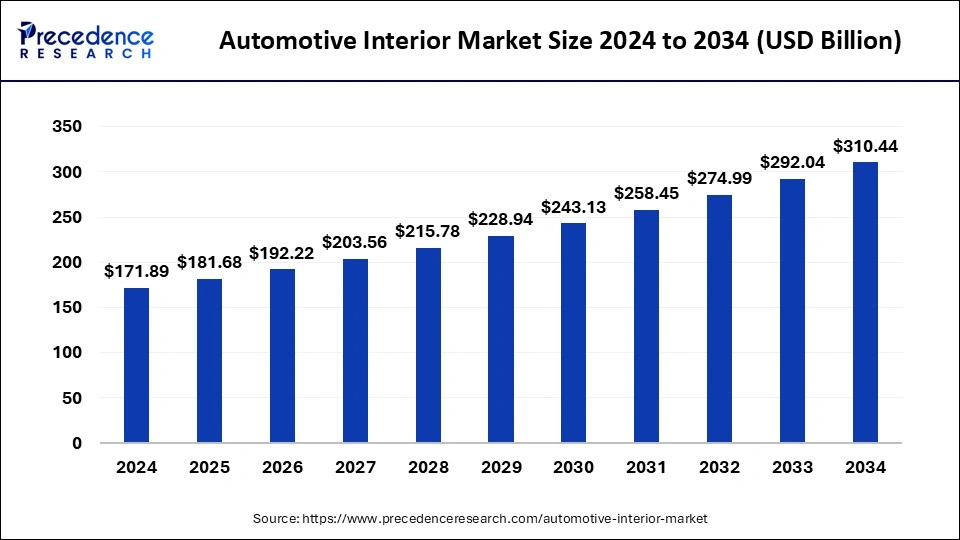
by The global automotive interior market is undergoing significant growth, driven by advancements in technology, rising consumer demand for luxury and comfort, and the increasing production of vehicles worldwide. With an estimated market value of USD 171.89 billion in 2024, the automotive interior market is poised to reach approximately USD 310.44 billion by 2034. This growth reflects a robust compound annual growth rate (CAGR) of 6.13% from 2025 to 2034.
Key Insights into the Automotive Interior Market
-
Market Size (2024): USD 171.89 billion
-
Market Size (2034): USD 310.44 billion
-
CAGR (2025-2034): 6.13%
-
Regional Dominance: Asia Pacific led the global market in 2024, accounting for 32.30% of the share.
-
Leading Components: The seating segment generated approximately 16.59% of the market share in 2024.
-
Material Trends: Composites represented 25.06% of the market share in 2024.
Market Segmentation Breakdown
The automotive interior market spans various components, vehicle types, materials, and regions. Let’s delve deeper into each of these segments:
1. By Component
The most significant contributor to the market is the seating segment, driven by the rising demand for luxury, comfort, and safety features in vehicles. Seats are often associated with maximum comfort, making them a priority for manufacturers. Additionally, rear seat entertainment is expected to be a high-growth segment as more consumers look for enhanced infotainment experiences.
2. By Vehicle Type
-
Passenger Vehicles: Dominating the market, the passenger vehicle segment accounted for 53.70% of the market share in 2024, driven by growing disposable incomes and a rise in personal vehicle ownership.
-
Commercial Vehicles: This segment accounted for 46.30% of the market share in 2024 and is expected to grow rapidly due to increasing demand for lightweight commercial vehicles and heavy-duty transportation.
3. By Material
-
Composites (especially glass fiber composites) hold the largest share in the automotive interior market, offering benefits like cost-efficiency, high impact resistance, and lightweight properties.
-
Fabric is expected to be the most opportunistic material segment, with growing demand for wool and other durable fabrics for automotive seating.
The Role of Artificial Intelligence in the Automotive Interior Market
The integration of artificial intelligence (AI) in automotive interiors is a game-changer. AI enhances the user experience by offering smart customization features such as:
-
Voice control
-
Gesture recognition
-
Customizable climate, seat, and infotainment settings
AI also plays a critical role in facilitating autonomous vehicles by processing sensor and camera data, leading to smarter, safer, and more efficient vehicle interiors. This trend opens up new avenues for interior designers focusing on connectivity, comfort, and automation.
Regional Insights: Growth and Trends
Asia Pacific
Asia Pacific dominates the automotive interior market, valued at USD 55.52 billion in 2024. The region is projected to grow at a CAGR of 6.46%, reaching USD 103.88 billion by 2034. Key factors driving this growth include:
-
Growing demand for luxury and comfort
-
The rise of electric vehicles (EVs) and autonomous cars
-
Major automotive manufacturers like Toyota, Honda, and Hyundai contributing to the market
North America
North America is experiencing the fastest growth, with a projected market size of USD 97.17 billion by 2034. The increasing preference for high-end luxuries, ergonomic seats, and smart interior technologies such as infotainment and climate control systems is driving this trend. Sustainability is also a key driver, with manufacturers focusing on eco-friendly and recyclable interior materials.
Europe
Europe’s automotive interior market is also growing steadily, with a projected size of USD 90.96 billion by 2034. Germany is leading the region in terms of automotive innovation, with an emphasis on luxury materials like natural leather and real wood. The trend towards smart infotainment systems and ambient lighting is also contributing to the market’s expansion.
LAMEA (Latin America, Middle East & Africa)
The LAMEA region is projected to grow at a slower pace, with an estimated market size of USD 14.77 billion by 2034. This is primarily driven by the adoption of electric vehicles and the rise in urbanization.
Trends Driving Market Growth
Several key trends are shaping the automotive interior market:
-
Technological Advancements: The integration of AI, smart systems, and autonomous vehicle technology is enhancing comfort, connectivity, and customization options for consumers.
-
Sustainability: As environmental concerns rise, the use of bioplastics, vegan leather, and recyclable materials is gaining momentum.
-
Lightweight Materials: There is increasing demand for lightweight materials to reduce vehicle weight, improving fuel efficiency, and meeting regulatory requirements.
-
Electric Vehicles (EVs): As EVs become more mainstream, the demand for lightweight materials and energy-efficient interiors continues to grow.
Market Challenges and Restraints
Despite the market’s growth, there are challenges that need to be addressed:
-
High Costs of Advanced Technologies: The incorporation of infotainment systems, advanced safety features, and interactive displays raises production costs for manufacturers.
-
Fluctuating Raw Material Prices: The cost of raw materials, including plastics and metals, is subject to global supply chain disruptions and geopolitical factors, which can affect production costs.
The Future of Automotive Interiors: Opportunities and Innovations
Looking ahead, the market is filled with opportunities, particularly in the bioplastics segment, where sustainable and eco-friendly materials are gaining popularity. Manufacturers are increasingly looking for greener alternatives to traditional materials like petroleum-based plastics and leather. Additionally, automated driving technologies and autonomous vehicles are pushing the boundaries of interior designs, with a focus on comfort and convenience.
Notable Players in the Automotive Interior Market
Key players in the global automotive interior market include:
-
ContiTech AG
-
Toyoda Gosei Co., Ltd.
-
Grupo Antolin
-
Draxlmaier Group
-
Yanfeng Automotive Interiors
-
Faurecia S.A.
-
Magna International
Read Also: Pharmaceutical Excipients Market
For inquiries regarding discounts, bulk purchases, or customization requests, please contact us at sales@precedenceresearch.com
