Personalized Therapeutics, AI-Driven Diagnostics, and Government Support Reshape Clinical Landscape
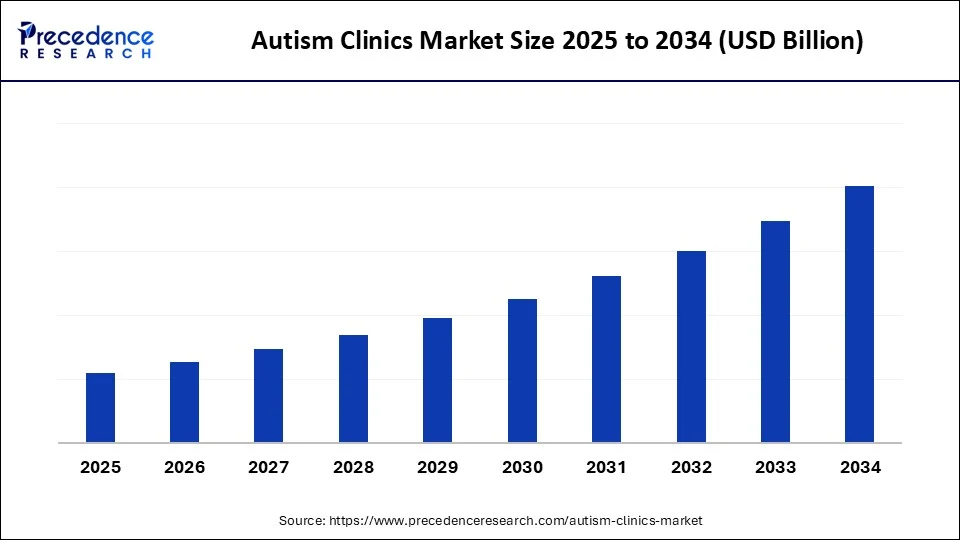
The global autism clinics market is poised for transformative growth, driven by rising autism prevalence, robust early intervention efforts, technological breakthroughs, and expanding government support. According to new data published by Precedence Research, North America led with a 47% market share in 2024, but Asia Pacific is set to experience the fastest growth through 2034 as telehealth and AI technologies gain momentum. The report forecasts strong demand for multidisciplinary care and personalized treatment regimens, positioning the industry for a new era of innovation and improved outcomes.
Quick Insights
-
Market Value (2024): Dominated by North America (47% share)
-
Growth Hotspot (Forecast 2025–2034): Asia Pacific (fastest CAGR)
-
Leading Service Type: Therapeutic services (38% share, 2024)
-
Top Age Group (2024): Children (6–12 years) – 41% market share
-
Ownership Segment: Independent autism clinics (45% share, 2024)
-
Mode of Service Delivery: In-person care dominates (62%, 2024), with hybrid models rising
-
Key Industry Trend: Rapid integration of AI for early diagnosis and personalized care
-
Payment Driver: Private insurance (34% share, 2024), but employer-sponsored plans growing fast
-
Top Companies Advancing Care: Major hospital-affiliated centers, innovative independent clinics, and digital therapeutics startups
-
Main Challenges: Reimbursement gaps, inconsistent coverage, cost constraints, and clinician shortages
Global Autism Clinics Market Revenue Breakdown
| Segment | 2024 Market Share (%) | Key Drivers |
|---|---|---|
| North America | 47 | Early detection, robust infrastructure, strong advocacy |
| Asia Pacific (Fastest-Growing) | N/A | Tech adoption, rising income, public campaigns |
| Therapeutic Services | 38 | Personalized, evidence-based interventions |
| Children (6–12 Years) | 41 | School screening, early intervention |
| Independent Clinics | 45 | Innovative care models, community partnerships |
| In-Person Delivery | 62 | Direct engagement, progress monitoring |
| Private Insurance | 34 | Greater flexibility, bundled care options |
What New Opportunities and Trends Redefine the Autism Clinics Market in 2025 and Beyond?
Personalized Care Meets Technology
Artificial intelligence is radically altering clinical pathways—from analyzing behavioral patterns to predicting optimal therapies for individuals. Clinics now incorporate AI-driven diagnostic tools that assess speech, eye movement, and social cues for earlier and more accurate identification of Autism Spectrum Disorder (ASD). Predictive analytics enable providers to fine-tune therapy regimens, measuring response rates in real time and supporting dynamic, patient-centric care.
Telehealth and Hybrid Models Expand Access
While traditional in-person therapy maintains a stronghold due to its hands-on benefits, telehealth solutions are growing rapidly—especially for families in rural or underserved regions. Hybrid models (combining virtual and in-person care) are projected for strong growth as they offer flexibility, continuity, and cost-effectiveness for follow-up sessions, parent training, and certain therapies.
Government Backing Fuels Capacity Building
Multiple governments are channeling funds and regulatory support into autism research, early screening programs, and mandated insurance coverage. Strategic investments empower clinics to deploy advanced technologies, expand staff training, and enhance family outreach—ultimately improving access to diagnosis and intervention, especially in lower-income and emerging economies.
Expert Commentary
“The autism clinics sector has entered a breakthrough phase. We’re now seeing AI and telehealth converge with multidisciplinary care, making earlier diagnosis and truly individualized treatment more accessible than ever. As public and private sectors rally around autism as a public health priority, expect ongoing innovation, broader insurance options, and a deeper focus on outcomes. The next decade will demand, and deliver, more inclusive, affordable, and technologically advanced autism care.”
— Dr. Riley Madsen, Principal Consultant, Precedence Research
Regional and Segmentation Analysis
North America: Global Epicenter for Autism Clinics
With almost half the global market, North America’s dominance is underpinned by extensive advocacy, high public awareness, and a sophisticated network of standalone and hospital-affiliated autism centers. Major U.S. players benefit from government funding, active insurance inclusion, and a thriving ecosystem for research and technical innovation. Notably, school-based screenings and the use of digital therapeutics have expanded early detection and intervention to previously underserved groups.
Asia Pacific: Fastest-Growing Market
Asia-Pacific nations—most notably India, Japan, South Korea, and Australia—are accelerating public education efforts, ratcheting up early detection, and harnessing mobile health apps to close geographic gaps. Rising disposable incomes and a supportive regulatory landscape position the region for the strongest CAGR through 2034, as hybrid and virtual care become more mainstream.
Service Segmentation: Therapeutic Services on Top
Therapeutic services remain the largest and most robust clinic segment, encompassing cognitive behavioral therapy (CBT), family counseling, occupational and speech therapy, and social skills training. Insurers and public programs are increasingly reimbursing such services, particularly when care models are multidisciplinary and evidence-based.
Age Segmentation: Focus on Children, Growth Among Adults
Children aged 6–12 account for the largest revenue share, with early intervention recognized as transformative. However, there’s a notable market shift toward adult services, as diagnosis and recognition of ASD in adults improve, prompting expansion into vocational training, counseling, and life skills development.
Model and Ownership: Independent Clinics Lead, Hospital-Affiliated Sector Rises
Independent clinics thrive thanks to innovative programs, specialized staff, and rapid service turnaround. Their flexible hours, community collaborations, and deep knowledge of ASD nuances attract both urban and suburban families. Meanwhile, hospital-affiliated clinics are projected for above-average growth, leveraging multidisciplinary resources and access to clinical research.
Payment Models: Private Insurance Dominates, Employer Coverage Expanding
While private insurance holds the largest share, employer-sponsored benefits are emerging as a growth engine—prompting major companies to partner with clinics and integrate ASD services into health plans. This trend not only improves access for workers’ families but also stimulates broader adoption of digital and on-site care.
Mode of Care: In-Person Now, Hybrid Next
In-person services will remain crucial for nuanced interpersonal interventions, but the future belongs to hybrid care, with secure video, mobile apps, and remote coaching gaining ground.
Read Also:
Industry Breakthroughs: Leading Companies at the Forefront
-
AI-Driven Diagnostics: Major clinical networks in the U.S. and Japan now use AI to review videos, analyze speech, and score behavioral data for earlier, more accurate diagnoses.
-
Telehealth Pioneers: Emerging startups are delivering evidence-based therapies via secure mobile platforms, overcoming distance and travel constraints.
-
Integrated Hospital Centers: Hospital-affiliated autism clinics are driving innovation through clinical trials, implementation of latest care guidelines, and multidisciplinary collaboration—delivering comprehensive, outcomes-focused care to complex cases.
Challenges and Cost Pressures
Despite market expansion, reimbursement shortfalls persist, especially for therapies such as ABA and social skills training not fully covered by insurers. Clinics in rural and lower-income regions struggle with sustainability, while fragmented policies and regional funding inconsistencies restrict access. Recruitment and retention of highly trained clinicians remains a key bottleneck. Rising demand and rapid expansion are also driving up competition for medical office space, as autism-focused clinics increasingly outbid traditional providers for prime locations.
Real-World Case: Clinic Expansion Fuels Medical Office Transformation
In the U.S. and other mature markets, the boom in autism clinics has redefined medical real estate. Once-vacant traditional medical offices are now occupied by specialized autism centers, pressing up occupancy rates and attracting private capital. This shift not only expands care access but also intensifies competition for clinical space—a phenomenon noted by healthcare real estate analysts as a positive signal for long-term industry sustainability.
Ready to Take the Next Step?
Download your complimentary sample report, schedule a meeting with our analysts, or request custom industry insights at
www.precedenceresearch.com/autism-clinics-market
Experience actionable intelligence and strategic recommendations for your organization.
About Precedence Research
Precedence Research is a global leader in market intelligence, providing in-depth reports and actionable insights in healthcare, life sciences, and emerging technologies. Our experts leverage deep industry connections and data-driven research to inform decision-makers and empower growth across the market spectrum.
Press Contact:
Precedence Research
500 N Michigan Ave, Suite 600
Chicago, IL 60611
Email: sales@precedenceresearch.com
Phone: +1 (888) 664-2793